YAZININ İCADINDAN GAZETECİLİĞE:  
KAYDIN, SÖZÜN VE DİRENİŞİN UZUN YOLCULUĞU

FROM THE INVENTION OF WRITING TO JOURNALISM:
THE LONG JOURNEY OF RECORD, WORD, AND RESISTANCE
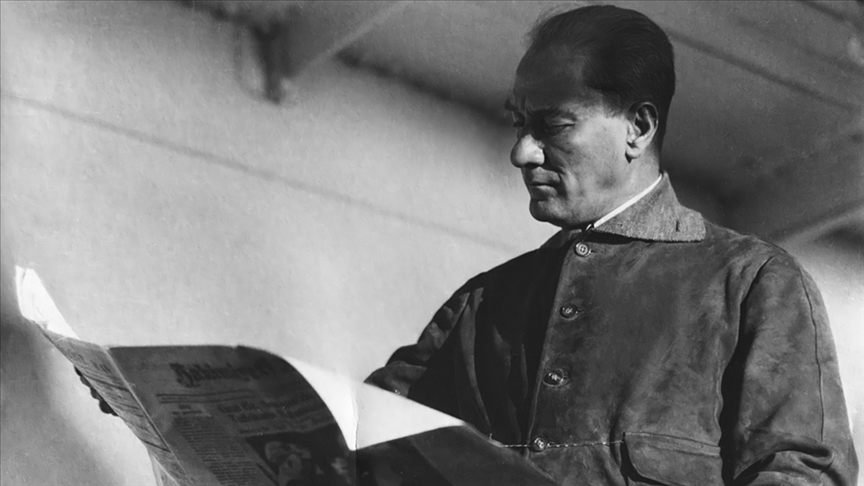
 

“Türkiye basını, milletin gerçek ses ve iradesinin doğduğu yer olan Cumhuriyet’in etrafında çelikten bir kale oluşturacaktır… Bir düşünce kalesi, düşünce yolu kalesi. Basın görevlilerinden bunu istemek, Cumhuriyet’in hakkıdır.”

Mustafa Kemal ATATÜRK

“Türkiye basını milletin gerçek ses ve iradesinin doğduğu yer olan cumhuriyetin etrafında çelikten bir kale oluşturacaktır… bir düşünce kalesi, düşünce yolu kalesi. Basın görevlilerinden bunu istemek, cumhuriyetin hakkıdır.” MUSTAFA KEMAL ATATÜRK

Sözün Kalıcı Hale Geldiği Eşik.

İnsanlık tarihine dönüp bakıldığında, bütün büyük kırılmaların bir eşikte gerçekleştiği görülür. Bu eşiklerden belki de en belirleyici olanı, sözün uçuculuktan kurtulup kalıcı hâle geldiği andır. İnsan konuşarak var olmuş, fakat yazarak hatırlamıştır. Hatırlamak ise yalnızca bireysel bir ihtiyaç değil; iktidarın kurulması, düzenin sürdürülmesi ve direnişin mümkün hâle gelmesi açısından tarihsel bir dönüm noktasıdır.

The Threshold Where The Word Becomes Permanent

When we look back at human history, we see that all major ruptures occur at a threshold. Perhaps the most decisive of these thresholds is the moment when the word escapes its fleeting nature and becomes permanent. Human beings existed by speaking, but they remembered by writing. Remembering, however, is not merely an individual need; it is a historical turning point in terms of the establishment of power, the maintenance of order, and the possibility of resistance.

Yazının İcadı ve Sümerler

Yaklaşık altı bin yıl önce Mezopotamya’da Sümerler tarafından geliştirilen çivi yazısı, insanlık tarihinin bilinen ilk yazı sistemidir. Bu yazı sistemi, romantik ya da sanatsal bir arayışın ürünü olarak değil; son derece sert ve pratik bir zorunluluktan doğmuştur. Tapınak ekonomilerinde üretilen tahılın, saraylarda tutulan hayvanların, iş gücünün ve borç ilişkilerinin kayıt altına alınması gerekmekteydi. Yazı, bu nedenle ilk andan itibaren bir düzenleme ve denetleme aracı olarak ortaya çıkmıştır.

The Invention of Writing and The Sumerians

Approximately six thousand years ago, cuneiform writing developed by the Sumerians in Mesopotamia became the first known writing system in human history. This system did not emerge as the product of a romantic or artistic pursuit, but rather from an extremely harsh and practical necessity. Grain produced in temple economies, animals kept in palaces, labor, and debt relations needed to be recorded. Writing therefore emerged from the very beginning as an instrument of organization and control.

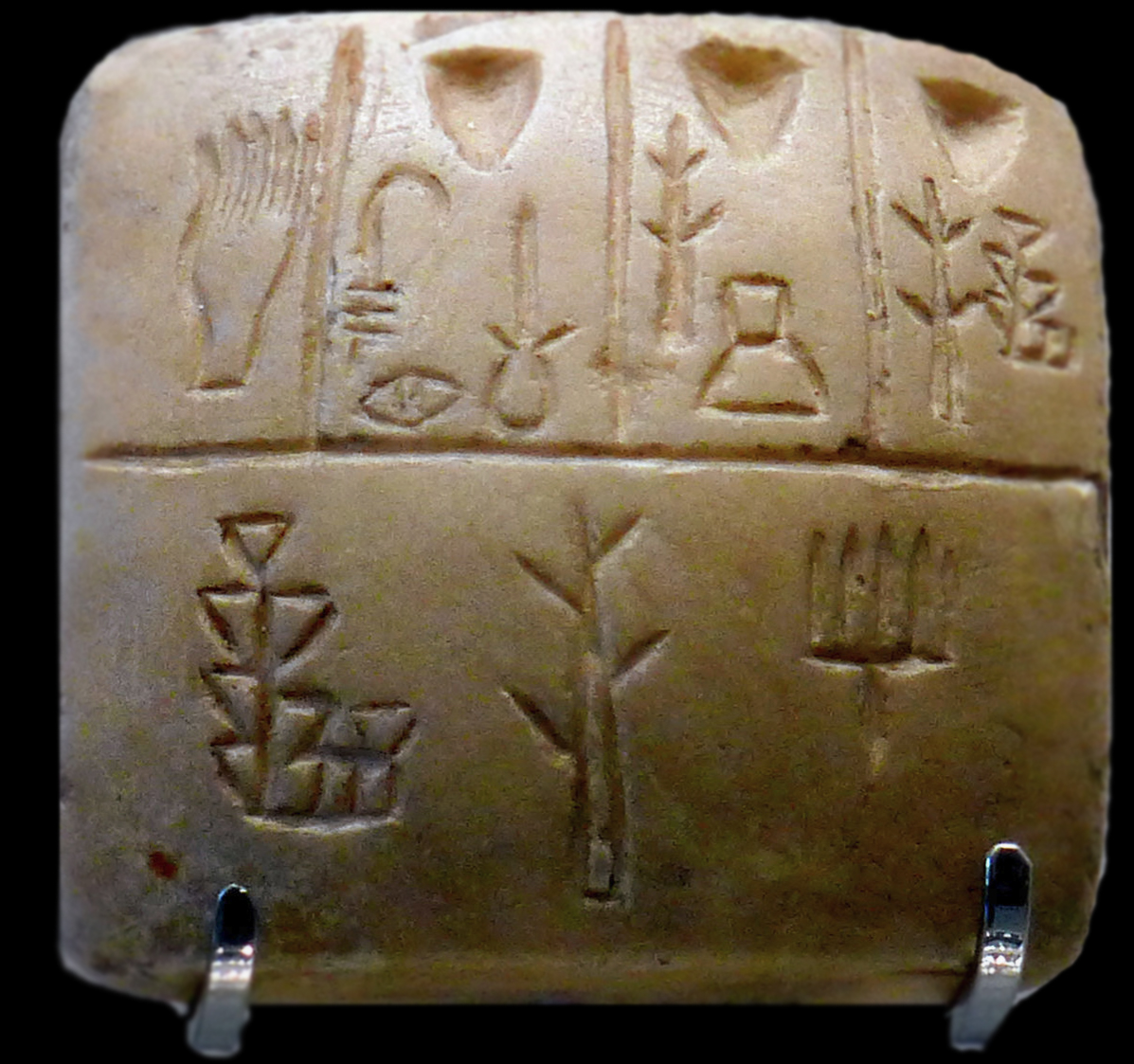
MÖ 3300–3000 Uruk Dönemi çivi yazısı Tapınak / depo muhasebe kaydı. Ekonomik kayıt belgesidir.

          “Bu taş sessizdir ama medeniyetin nasıl                                    başladığını çok net anlatır.”

FOTOĞRAF-1: MÖ 3300–3000 Uruk Dönemi çivi yazısı. Tapınak/depo muhasebe kaydı. Ekonomik kayıt belgesidir. 

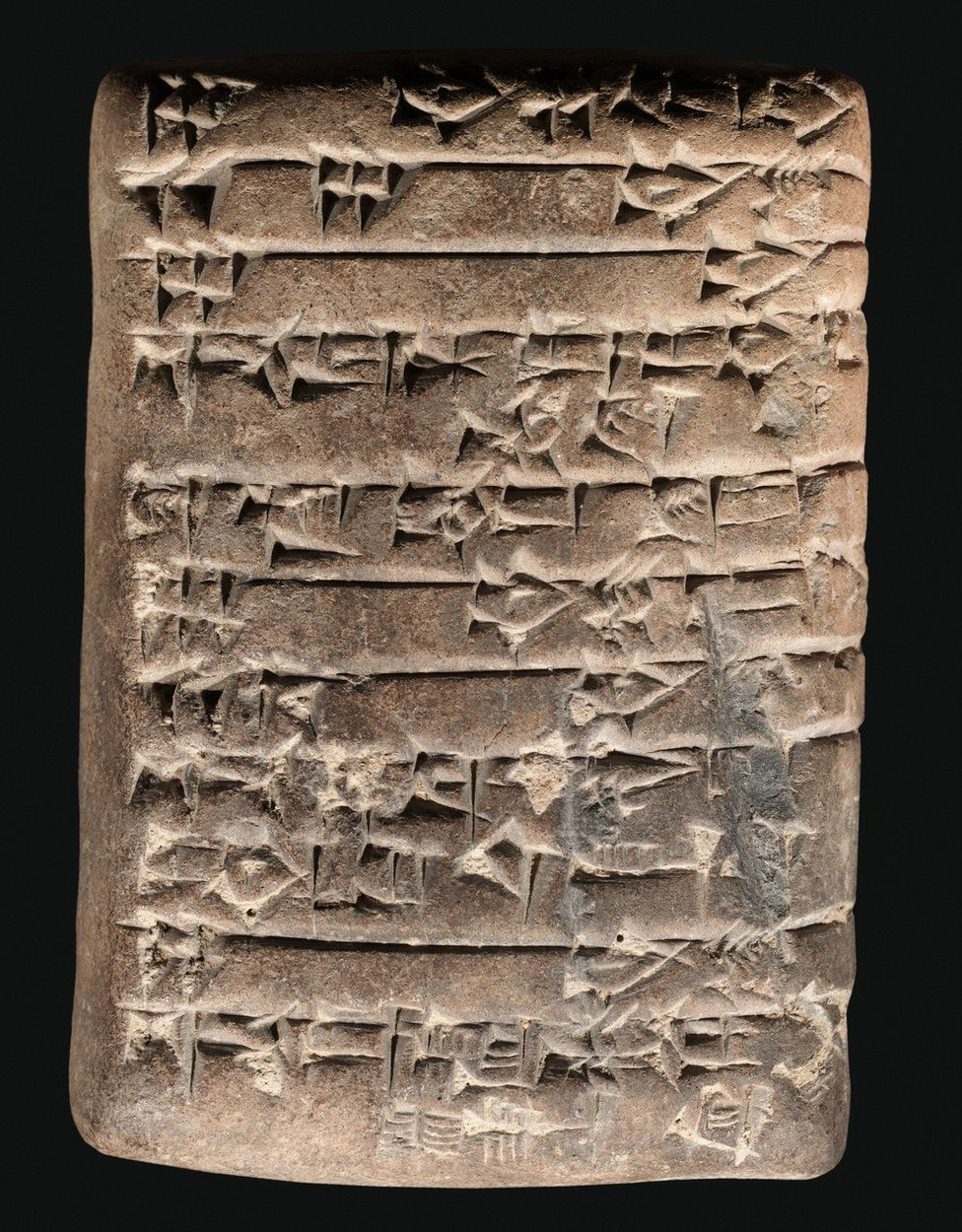
 FOTOĞRAF-2: MÖ 3300–3000 Uruk Dönemi çivi yazısı Tapınak / depo muhasebe kaydı. Ekonomik kayıt belgesidir.

          ————————————-

           “This stone is silent, but it tells very clearly                                  how civilization began.”

PHOTO-1: Cuneiform tablet from the Uruk Period, 3300–3000 BCE. Temple/storage accounting record. It is an economic record document.

PHOTO-2: Cuneiform tablet from the Uruk Period, 3300–3000 BCE. Temple / storage accounting record. An economic record document.

sumer_4

Uruk Tabletleri ve İktidarın Hafızası:

Uruk kentinde bulunan erken dönem tabletler, yazının ilk kullanım alanının tapınaklar ve saraylar olduğunu açık biçimde göstermektedir. Kim ne kadar çalışmış, kime ne verilmiş, kim borçlu, kim alacaklı; bütün bu bilgiler yazı aracılığıyla sabitlenmiştir. Böylece yazı, iktidarın hafızası hâline gelmiş; unutmaya karşı değil, itiraza karşı bir araç olarak da işlev görmüştür.

Yazının Halkan Uzak Yüzyılları:

Yazı yüzyıllar boyunca dar bir zümrenin elinde kalmış, halktan uzak tutulmuştur. Okuryazarlık, bilgiye erişim ve kayıt tutma hakkı, uzun süre seçkin sınıfların tekelinde olmuştur. Ancak zamanla toplumsal yapı değişmiş, şehirler büyümüş ve ticaret ağları genişlemiştir. Özellikle 16. ve 17. yüzyıllarda Avrupa’da ticaretle uğraşan kesimler için güncel bilgi hayati bir ihtiyaç hâline gelmiştir.

Uruk Tablets And The Memory Of Power

Early tablets found in the city of Uruk clearly show that the first areas of use of writing were temples and palaces. Who worked how much, who was given what, who was in debt, who was a creditor—all this information was fixed through writing. Thus, writing became the memory of power, functioning not against forgetting but also against objection.

Centuries When Writing Was Distant From The People

For centuries, writing remained in the hands of a narrow elite and was kept distant from the people. Literacy, access to knowledge, and the right to keep records were for a long time monopolized by privileged classes. However, over time social structures changed, cities grew, and trade networks expanded. Especially in the 16th and 17th centuries in Europe, up-to-date information became a vital necessity for groups engaged in trade.

Yazı Öncesi Haber ve Sözlü Kamuoyu:

Yazılı ve periyodik basın ortaya çıkmadan çok önce, Eski Türk topluluklarında kamusal bilginin dolaşımını sağlayan sözlü bir haber ağı mevcuttu. “Sancıracı” olarak adlandırılan bu kişiler, seferlerden, toy ve kurultaylardan, sınır boylarından edindikleri bilgileri boy beylerine ve halka aktaran haber taşıyıcılarıydı. Sancıracılar, yalnızca emir ileten ulaklardan farklı olarak, gördüklerini ve işittiklerini yorumlayarak anlatır; böylece toplumsal hafızanın oluşmasına katkı sunarlardı.

Sancıracılar, bugünkü anlamıyla gazeteci olmasalar da, haber toplama, bilgiyi doğrulama ve kamuyu bilgilendirme gibi gazeteciliğin temel işlevlerini yazı öncesi sözlü kültür içinde yerine getirmişlerdir. Bu yönleriyle sancıracılar, yazılı basın öncesi dönemde kamusal bilginin dolaşımını sağlayan ve gazeteciliğin işlevsel öncülleri olarak değerlendirilebilecek tarihsel figürlerdir.

Pre-Writing News And The Oral Public Sphere: Sancıracılar

Long before the emergence of written and periodical press, early Turkic societies possessed an oral news network that enabled the circulation of public information. These individuals, known as sancıracılar, were news bearers who conveyed information gathered from military campaigns, toy and kurultay assemblies, and frontier regions to tribal leaders and the wider public. Unlike messengers who merely transmitted orders, sancıracılar narrated what they had seen and heard by interpreting events, thereby contributing to the formation of collective memory.

Although sancıracılar cannot be described as journalists in the modern sense, they fulfilled fundamental journalistic functions—such as gathering news, verifying information, and informing the public—within a pre-writing oral culture. In this respect, sancıracılar can be regarded as historical figures who enabled the circulation of public knowledge in the period before the written press and as functional precursors of journalism.

Johann Carolus ve Gazetenin Doğuş Mantığı:

Johann Carolus’un gazete yayımlama fikri, ideolojik bir arayıştan değil, doğrudan somut bir ihtiyaçtan doğmuştur.
17. yüzyılın başlarında Almanya’da ticaretle uğraşan tüccarlar ve şehirli zümreler, Avrupa’daki siyasi gelişmeleri, savaşları, ticaret yollarını ve ekonomik haberleri düzenli ve güvenilir biçimde öğrenmek istemekteydi.

Carolus, bu ihtiyacı ilk aşamada el yazısıyla çoğalttığı haber mektupları aracılığıyla karşılıyordu. Ancak zamanla bu mektuplara olan talep arttı; daha fazla insan aynı bilgilere, daha hızlı ve daha düzenli biçimde ulaşmak ister oldu. İşte tam bu noktada Carolus, mevcut yöntemin yetersiz kaldığını fark ederek haberleri basılı ve periyodik bir yayına dönüştürme yoluna gitti.

Bu nedenle Johann Carolus’un gazete yayımlama kararı, “bir fikir akımı başlatma” düşüncesinden çok, artan bilgi talebine verilen pratik bir çözüm olarak ortaya çıktı. Gazete, bu anlamda ilk ortaya çıktığında bir siyasi araçtan ziyade, bilgi dolaşımını düzenleyen bir iletişim aracıydı.

Ancak bu pratik adım, insanlık tarihinde çok daha büyük bir dönüşümün kapısını araladı. Çünkü düzenli basılı haber, zamanla yalnızca ticari bilgiyi değil; düşünceyi, eleştiriyi ve kamuoyunu da taşımaya başlayacaktı.

Johann Carolus and the Practical Origins of the Newspaper

Johann Carolus’s decision to publish a newspaper did not arise from an ideological pursuit, but rather from a concrete and practical necessity.
At the beginning of the 17th century, merchants and traders in Germany sought to obtain regular and reliable information about political developments, wars, trade routes, and economic conditions across Europe.

Initially, Carolus responded to this demand by preparing and distributing handwritten news letters. Over time, however, the demand for these letters increased significantly. A growing number of people wanted access to the same information more quickly, more regularly, and in a more systematic form. At this point, Carolus realized that handwritten circulation was no longer sufficient and decided to transform the news into a printed and periodical publication.

For this reason, Johann Carolus’s move toward publishing a newspaper should be understood not as an attempt to initiate an intellectual movement, but as a practical solution to an expanding demand for information. In its earliest form, the newspaper was not a political instrument, but rather a tool for organizing and circulating information.

Yet this practical step opened the door to a far greater historical transformation. Because once news became regularly printed and widely distributed, it began to carry not only commercial information, but also ideas, criticism, and ultimately, public opinion.

Relation aller Fürnemmen und gedenckwürdigen Historien
Yayıncı: Johann Carolus
Basım Yeri: Strasbourg Yıl: 1906 günümüze ulaşan en eski nüsha.
Almanya’nın yukarı ve aşağı bölgelerinde ve ayrıca Fransa, İtalya, İspanya, Macaristan, Polonya, Erdel (Transilvanya), Eflak, Boğdan, Türkiye (Osmanlı toprakları) ve diğer bölgelerde, 1609 yılı içinde meydana gelen önemli ve hatırlanmaya değer olayların derlemesi.
“Elde edebildiğim ve ulaşabildiğim tüm haberleri, mümkün olan en doğru ve güvenilir biçimde basılı hâle getirmeyi amaçlıyorum.” Bu ifade, gazetecilik tarihindeki en erken editoryal niyet beyanlarından biri olarak kabul edilir. Johann Carolus burada yorumcu, ideolog ya da siyasi bir aktör rolü üstlenmez. Kendini, bilgiyi derleyen ve dolaşıma sokan bir aracı olarak tanımlar. Bu yaklaşım, özel haber mektuplarından kamusal ve periyodik basına geçişin simgesidir ve modern gazeteciliğin temelini oluşturur.
 

elation aller Fürnemmen und gedenckwürdigen Historien
Publisher: Johann Carolus
Place of Publication: Strasbourg
Year: 1605 (earliest surviving copy: 1609)

A compilation of important and memorable events that took place during the year 1609 in Upper and Lower Germany, as well as in France, Italy, Spain, Hungary, Poland, Transylvania, Wallachia, Moldavia, Turkey (the Ottoman lands), and other regions.“I aim to prepare for print all the news that I am able to obtain and reach, in the most accurate and reliable manner possible.” This statement is considered one of the earliest editorial declarations of intent in the history of journalism. Johann Carolus does not assume the role of a commentator, ideologue, or political actor. He defines himself as an intermediary who collects information and puts it into circulation. This approach symbolizes the transition from private news letters to public and periodical press and constitutes the foundation of modern journalism.

İlk Gazetelerin Sınırları:

Ancak erken dönem gazeteler bugünkü anlamda eleştirel ya da muhalif yayınlar değildi. İçerikleri çoğunlukla savaş haberleri, ticaret yolları ve diplomatik gelişmelerle sınırlıydı. İktidar eleştirisi yoktu; halkın sesi yoktu. Gazete henüz kamusal denetim işlevini üstlenmemişti.

Siyasal Gazeteciliğe Geçiş:

Onyedinci yüzyılın ilerleyen dönemlerinde gazetecilik siyasal bir kimlik kazanmaya başladı. Fransa’da 1631 yılında yayımlanan “La Gazette”, devlet merkezli bir yayın olmasına rağmen siyasal haberleri düzenli biçimde sunmasıyla gazeteyi politik alanın bir parçası hâline getirdi. Böylece gazete, yalnızca bilgi aktaran bir araç olmaktan çıkıp kamuoyunu şekillendiren bir güç olarak konumlanmaya başladı.

Osmanlı’da İlk Gazete: Takvim-i Vekayi:

Osmanlı İmparatorluğu’nda gazetecilik, Avrupa’ya kıyasla daha geç ortaya çıkmıştır. 1831 yılında Sultan II. Mahmud döneminde yayımlanan Takvim-i Vekayi, Osmanlı’nın ilk Türkçe gazetesi olarak kabul edilir. Ancak bu yayın, modern anlamda gazetecilikten çok, devletin resmî görüşlerini halka duyuran bir bülten niteliği taşımaktaydı. Gazetenin dili devletti, bakış açısı saraydı.

The Limits of the First Newspapers:

However, early newspapers were not critical or oppositional publications in the modern sense. Their content was largely limited to war news, trade routes, and diplomatic developments. There was no criticism of power; there was no voice of the public. The newspaper had not yet assumed a function of public oversight.

The Transition to Political Journalism:

In the later periods of the seventeenth century, journalism began to acquire a political identity. In France, La Gazette, published in 1631, despite being a state-centered publication, became part of the political sphere by presenting political news on a regular basis. Thus, the newspaper began to position itself not merely as a tool for conveying information, but as a force shaping public opinion.

The First Newspaper in the Ottoman Empire: Takvim-i Vekayi:

Journalism in the Ottoman Empire emerged later in comparison to Europe. Published in 1831 during the reign of Sultan Mahmud II, Takvim-i Vekayi is regarded as the first Turkish-language newspaper of the Ottoman Empire. However, this publication functioned less as journalism in the modern sense and more as a bulletin that conveyed the official views of the state to the public. The language of the newspaper was that of the state; its perspective was that of the palace.

Halkın Gaztesi: Tercüman-I Ahval:

Tercümân-ı Ahvâl Osmanlı basın tarihinin gerçek dönüm noktasıdır.

Osmanlı basın tarihinde asıl kırılma noktası, 1860 yılında yayımlanmaya başlayan Tercümân-ı Ahvâl ile yaşanmıştır. Agâh Efendi tarafından çıkarılan bu gazete, yalnızca Osmanlı’nın ilk özel Türkçe gazetelerinden biri olmakla kalmamış; aynı zamanda basının ilk kez doğrudan halka yöneldiği bir mecra olmuştur.

Tercümân-ı Ahvâl’i önceki yayınlardan ayıran temel özellik, dil ve yaklaşım farkıdır. Gazete, Şinasi’nin kalemiyle, devletin resmî ve ağır üslubundan uzaklaşarak halkın anlayabileceği daha sade bir dil kullanmıştır. Bu tercih, yalnızca dilsel bir sadeleşme değil; aynı zamanda okurla kurulan ilişkinin değişmesi anlamına gelmektedir. Gazete artık buyuran değil, anlatan; tebliğ eden değil, tartışan bir araç hâline gelmiştir.

Bu yayınla birlikte gazete, yalnızca resmî kararları duyuran bir bülten olmaktan çıkmış; eğitim, adalet, ahlak, toplumsal düzen ve bireyin konumu gibi konuları gündeme taşıyan bir platforma dönüşmüştür. Tercümân-ı Ahvâl, halkı edilgen bir alıcı olarak değil, düşünen ve tartışan bir özne olarak konumlandırmıştır. Böylece Osmanlı basınında ilk kez “kamuoyu” fikri görünür hâle gelmiştir.

Ancak bu yenilikçi yaklaşım, aynı zamanda gerilimleri de beraberinde getirmiştir. Toplumsal meselelerin basın yoluyla tartışılması, devlet ve saray çevrelerinde rahatsızlık yaratmıştır. Her ne kadar Tercümân-ı Ahvâl başlangıçta doğrudan sert bir müdahaleyle karşılaşmamış olsa da, gazetenin eleştirel dili ve modernleşme vurgusu zamanla baskı ve sansürle karşı karşıya kalmasına yol açmıştır. Bu süreç, Osmanlı’da basın özgürlüğü ile iktidar arasındaki çatışmanın da erken bir örneğini oluşturmuştur.

Sonuç olarak Tercümân-ı Ahvâl, Osmanlı basın tarihinde yalnızca bir gazete değil; halkla konuşmayı seçen ilk kamusal alandır. Bu yayınla birlikte gazete, devletin sesi olmaktan çıkıp halkın aynası olmaya doğru ilk adımını atmış; modern Türk gazeteciliğinin temellerini atmıştır.

The People’s Newspaper: Tercümân-ı Ahvâl

Tercümân-ı Ahvâl represents the true turning point in the history of the Ottoman press.

The fundamental break in Ottoman press history occurred with the publication of Tercümân-ı Ahvâl in 1860. Published by Agâh Efendi, this newspaper was not only one of the first privately owned Turkish-language newspapers of the Ottoman Empire; it was also the first medium through which the press directly addressed the public.

The main feature that distinguished Tercümân-ı Ahvâl from earlier publications was its difference in language and approach. Through the pen of Şinasi, the newspaper moved away from the official and heavy style of the state and adopted a simpler language that the public could understand. This choice represented not merely a linguistic simplification, but also a transformation in the relationship established with the reader. The newspaper was no longer an instrument that commanded, but one that explained; no longer one that merely proclaimed, but one that invited discussion.

With this publication, the newspaper ceased to be a bulletin that simply announced official decisions and became a platform that brought issues such as education, justice, morality, social order, and the position of the individual into public debate. Tercümân-ı Ahvâl positioned the public not as passive recipients, but as thinking and debating subjects. Thus, for the first time in the Ottoman press, the idea of “public opinion” became visible.

However, this innovative approach also brought tensions with it. The discussion of social issues through the press caused discomfort within state and palace circles. Although Tercümân-ı Ahvâl did not initially face direct and harsh intervention, its critical language and emphasis on modernization eventually led it to confront pressure and censorship. This process constituted an early example of the conflict between press freedom and political power in the Ottoman Empire.

In conclusion, Tercümân-ı Ahvâl was not merely a newspaper in the history of the Ottoman press; it was the first public sphere that chose to speak with the people. With this publication, the newspaper took its first step away from being the voice of the state toward becoming the mirror of the public, thereby laying the foundations of modern Turkish journalism.

Kozmopolit Osmanlı Basını

Aynı dönemde Osmanlı coğrafyasında yabancı dillerde yayımlanan gazeteler de dikkat çekmektedir. Levantenler ve yabancı tüccarlar için çıkarılan bu yayınlar, imparatorluğun çok dilli ve kozmopolit basın yapısını oluşturmuştur.

The Cosmopolitan Ottoman Press

During the same period, newspapers published in foreign languages within Ottoman territories also drew attention. These publications, issued for Levantines and foreign merchants, constituted the empire’s multilingual and cosmopolitan press structure.

Osmanlı Basınında Kadın:

Ondukuzuncu yüzyılın sonlarına gelindiğinde, Osmanlı toplumunda kadınların kamusal alandaki görünürlüğü basın aracılığıyla belirginleşmeye başlamıştır. Uzun süre özel alanla, ev içi rollerle ve aile yapısıyla sınırlandırılan kadın kimliği, gazete ve dergiler aracılığıyla yavaş yavaş kamusal tartışmaların bir parçası hâline gelmiştir. Basın, bu süreçte kadınlar için yalnızca bir ifade alanı değil, aynı zamanda kendilerini tanımladıkları ve yeniden kurdukları bir kamusal zemin oluşturmuştur.

Osmanlı’da kadınların basındaki ilk görünümü, büyük ölçüde aile, ahlak, annelik ve eğitim gibi konularla sınırlıdır. Bu erken dönem yazılarında kadın, toplumun ahlaki düzeninin taşıyıcısı olarak konumlandırılmıştır. Ancak bu sınırlı çerçeve zamanla genişlemiş; kadın yazarlar yalnızca ev içi rollerle değil, toplumun bütünüyle ilgili meselelerle de söz almaya başlamıştır. Böylece kadın yazıları, özel alanın sınırlarını aşarak kamusal tartışmaların bir parçası hâline gelmiştir.

Tam da bu noktada, kadınların basın yoluyla görünür hâle gelmesi bazı kesimlerde derin bir korku ve tehdit algısı yaratmıştır. Bu korku, yalnızca kadınların yazı yazmasından değil; yazı aracılığıyla düşünce üretmelerinden, sorgulamalarından ve toplumsal rolleri yeniden tanımlamalarından kaynaklanmaktadır. Kadının kamusal alanda söz sahibi olması, yerleşik erkek egemen düzeni ve hiyerarşik toplumsal yapıyı sarsan bir gelişme olarak algılanmıştır.

Bu korku, zamanla yalnızca söylemsel tepkilerle sınırlı kalmamış; doğrudan cezalandırma mekanizmalarına dönüşmüştür. Kadınlara yönelik dergi ve gazeteler sansüre uğramış, bazı yayınlar kapatılmış, yazılar toplatılmıştır. Kadın yazarlar kimi zaman açık baskıyla, kimi zaman da dolaylı yollarla susturulmaya çalışılmıştır. Aile baskısı, toplumsal dışlanma, ahlaksızlık suçlamaları ve itibarsızlaştırma kampanyaları, bu cezalandırma biçimlerinin en yaygın olanlarıdır.

Birçok kadın yazar, bu baskılar nedeniyle yazılarını kendi adlarıyla yayımlayamamış, mahlas kullanmak zorunda kalmıştır. Bazıları yazmaktan vazgeçmeye zorlanmış, bazıları ise dergilerinin kapatılmasıyla kamusal alandan silinmeye çalışılmıştır. Kadının kalemi, devlet ve muhafazakâr çevreler tarafından denetlenmesi gereken bir “tehlike” olarak görülmüştür. Bu durum, kadınların basın yoluyla var olma mücadelesinin ne denli bedelli olduğunu açıkça göstermektedir.

Bu sürecin en çarpıcı ve tarihsel olarak en sert örneği, Halide Edip Adıvar’ın yaşadıklarıdır. Halide Edip, yalnızca yazıları ve gazeteciliğiyle değil, Milli Mücadele döneminde kalemi ve hitabetiyle halkı doğrudan direnişe çağırması nedeniyle de hedef hâline gelmiştir. İstanbul’un işgalinden sonra, Ankara hareketini destekleyen yazıları ve konuşmaları sebebiyle, işgal güçleriyle iş birliği içindeki İstanbul Hükûmeti tarafından hakkında idam kararı çıkarılan ilk kadın gazeteci olmuştur.

Bu karar, Osmanlı basın tarihinde bir ilktir. Daha önce erkek gazeteciler sürgün edilmiş, tutuklanmış ya da susturulmuştu; ancak bir kadının kalemi nedeniyle resmen idamla cezalandırılmak istenmesi, kadın basın tarihindeki korkunun ve tahammülsüzlüğün ulaştığı son noktayı göstermektedir. Halide Edip, bu kararla birlikte yalnızca bir yazar ya da gazeteci değil, kalemi yüzünden ölümle yargılanan bir direniş figürü hâline gelmiştir.

Fatma Aliye Hanım, kadınların eğitim ve düşünsel kapasitesini savunan yazıları nedeniyle “aile düzenini bozmakla” suçlanmış; Şükûfe Nihal, kadınların kamusal hayata katılımını savunduğu için toplumsal ve edebî çevrelerde dışlanmıştır. Halide Edip’in idamla yargılanması ise, bu baskı zincirinin en uç noktasıdır. Bu üç kadın, farklı dönemlerde ve farklı biçimlerde, kalemlerinin bedelini ödemiştir.

Kadınların cezalandırılması, aslında onların etkisinin kabul edilmesidir. Susturulmak istenen her kadın kalemi, mevcut düzen için gerçek bir tehdit olarak görülmüştür. Yazı, bu bağlamda yalnızca bir ifade biçimi değil; itaate karşı bir direniş alanıdır.

Sonuç olarak Osmanlı’da basında kadın, 19. yüzyılın sonlarından itibaren yalnızca görünür olmakla kalmamış; bu görünürlüğün bedelini sansürle, dışlanmayla ve hatta idam tehdidiyle ödemiştir. Halide Edip Adıvar’ın idamla yargılanması, kadın gazeteciliğinin ne denli güçlü ve tehlikeli görüldüğünün tarihsel kanıtıdır. Buna rağmen kadın kalemi geri çekilmemiş; aksine Osmanlı toplumunun modernleşme sürecinde silinmez bir iz bırakmıştır. Bu mücadele, Cumhuriyet’in düşünsel ve toplumsal altyapısını besleyen en güçlü miraslardan biri olmuştur.

Women in the Ottoman Press

By the late nineteenth century, women in Ottoman society began to become visibly present in the public sphere through the press. Long confined to the private sphere, domestic roles, and family structure, female identity gradually became part of public debate through newspapers and magazines. In this process, the press served not only as a space of expression for women, but also as a public ground on which they defined and reconstructed themselves.

The earliest presence of women in the Ottoman press was largely limited to issues such as family, morality, motherhood, and education. In these early writings, women were positioned as the bearers of society’s moral order. Over time, however, this restricted framework expanded, and women writers began to speak not only about domestic roles but also about issues concerning society as a whole. Thus, women’s writings crossed the boundaries of the private sphere and became part of public discussion.

At precisely this point, women’s growing visibility through the press generated deep fear and a sense of threat among certain segments of society. This fear stemmed not merely from women writing, but from their production of thought, questioning of authority, and redefinition of social roles through writing. Women’s participation in the public sphere as speaking subjects was perceived as a destabilizing force that challenged the established male-dominated order and hierarchical social structure.

Over time, this fear did not remain limited to rhetorical reactions but turned into direct mechanisms of punishment. Newspapers and magazines directed at women were subjected to censorship, some publications were shut down, and articles were confiscated. Women writers were silenced sometimes through open pressure and sometimes through indirect means. Family pressure, social exclusion, accusations of immorality, and campaigns of discreditation were among the most common forms of punishment.

Many women writers were unable to publish under their own names due to these pressures and were forced to use pseudonyms. Some were compelled to abandon writing altogether, while others were pushed out of the public sphere through the closure of their publications. The female pen was perceived by the state and conservative circles as a “danger” that needed to be controlled. This clearly demonstrates how costly women’s struggle for existence in the press truly was.

The most striking and historically severe example of this process was the case of Halide Edip Adıvar. Halide Edip became a target not only because of her writings and journalistic activity, but also because of her public speeches and her open calls for resistance during the National Struggle. Following the occupation of Istanbul, due to her writings and speeches supporting the Ankara movement, she became the first female journalist for whom a death sentence was demanded by the Istanbul Government collaborating with the occupying forces.

This decision was unprecedented in Ottoman press history. Male journalists had previously been exiled, imprisoned, or silenced; however, the fact that a woman was formally sentenced to death because of her pen demonstrates the extreme level of fear and intolerance directed at women in the press. With this ruling, Halide Edip became not only a writer or journalist, but a figure of resistance put on trial for her words, under the threat of death.

Fatma Aliye was accused of “undermining the family order” because of her writings defending women’s education and intellectual capacity; Şükûfe Nihal was marginalized within literary and social circles for advocating women’s participation in public life. Halide Edip’s death sentence represents the furthest point of this chain of repression. These three women, in different periods and forms, paid the price for their pens.

The punishment of women was, in fact, an acknowledgment of their influence. Every female pen that was sought to be silenced was perceived as a real threat to the existing order. In this context, writing was not merely a form of expression, but a field of resistance against obedience.

In conclusion, women in the Ottoman press did not merely become visible from the late nineteenth century onward; they paid for this visibility with censorship, exclusion, and even the threat of execution. The death sentence demanded for Halide Edip Adıvar stands as historical proof of how powerful and dangerous women’s journalism was perceived to be. Despite all forms of repression, the female pen did not retreat; on the contrary, it left an indelible mark on the Ottoman modernization process. This struggle became one of the strongest legacies shaping the intellectual and social foundations of the Republic.
Milli Mücadele ve Gazetecilik

Milli Mücadele yıllarında gazetecilik, klasik anlamıyla haber aktaran bir meslek olmaktan çıkmış; doğrudan direnişi örgütleyen bir eylem biçimine dönüşmüştür. İşgal altındaki bir ülkede basın, tarafsız kalabilecek bir alan değildir. Gazete sayfaları, bu dönemde yalnızca bilgi değil; irade, cesaret ve çağrı taşımıştır. Kalem, susturulmak istenen bir milletin sesi hâline gelmiş; yazı, fiilî mücadelenin ayrılmaz bir parçası olmuştur.

Bu dönemde gazeteci, yalnızca yazan değil; yazdığı için takip edilen, tehdit edilen ve cezalandırılan bir figürdür. Sansür, baskı ve kapatmaların olağan hâle geldiği bu ortamda, bir gazete çıkarmak başlı başına bir direniş eylemi anlamına gelmiştir. Matbaalar basılmış, yazılar toplatılmış, gazeteciler sürgüne gönderilmiş ya da tutuklanmıştır. Buna rağmen basın susmamış; çünkü susmak, işgali kabullenmek anlamına gelmiştir.

Ancak direniş yalnızca fikirle değil, maddeyle de verilmiştir. Milli Mücadele basınının en büyük sorunlarından biri, kâğıt bulmaktaki zorluk olmuştur. İşgal yıllarında kâğıt ithalatı denetim altındadır; matbaa malzemeleri ya yasaklanmış ya da yüksek maliyetler nedeniyle ulaşılamaz hâle gelmiştir. Birçok gazete, basılacak kâğıdı bulamadığı için kapanma noktasına gelmiş; bazıları ise defalarca aynı kâğıdı kullanmak, sayfa sayısını azaltmak ya da çok düşük tirajlarla yayımlanmak zorunda kalmıştır.

Bu şartlar altında kâğıt, sıradan bir basım malzemesi değil; direnişin en kıymetli unsurlarından biri hâline gelmiştir. Kâğıt, çoğu zaman yerel tüccarlardan, gizli bağışçılardan ya da Anadolu’daki milliyetçi çevrelerden temin edilmiştir. Kimi zaman eski defter yaprakları, kimi zaman depolarda unutulmuş ambalaj kâğıtları kullanılmış; hatta el ilanları elde çoğaltılarak dağıtılmıştır. Gazete basmak, yalnızca yazmak değil; kâğıdı saklamak, taşımak ve korumak anlamına da gelmiştir.

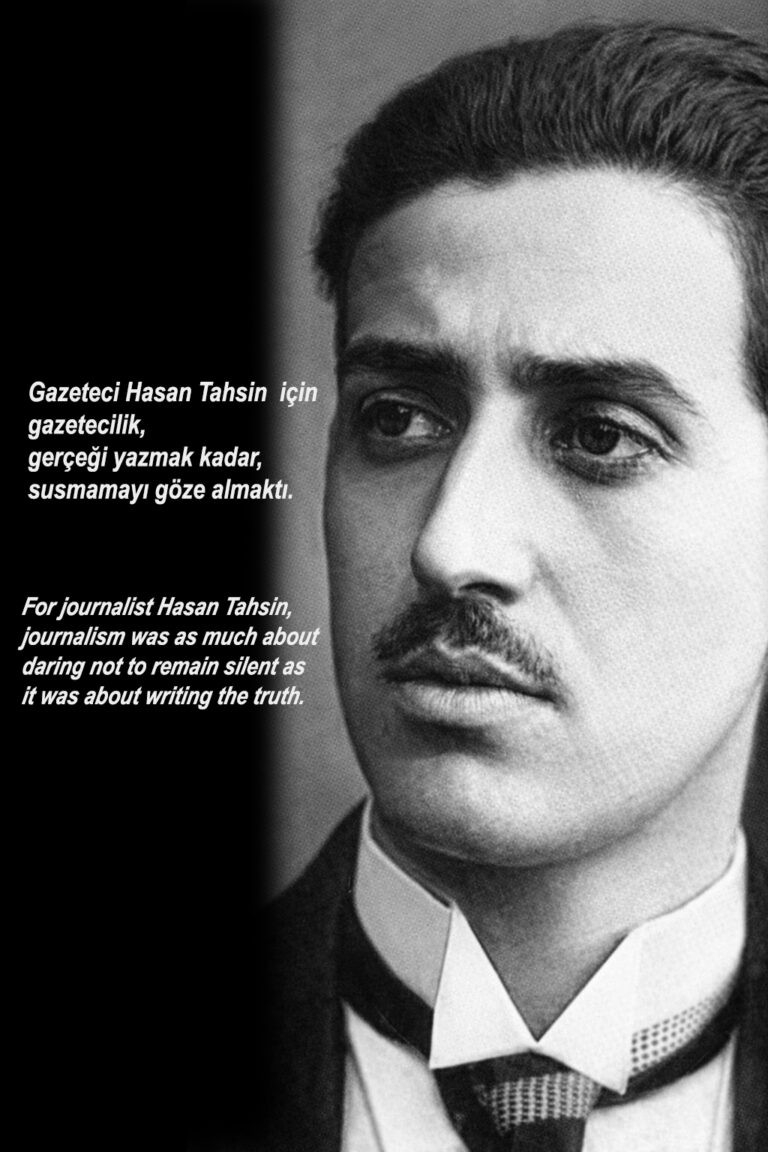
Bu direnişçi basın geleneğinin en çarpıcı simgelerinden biri Hasan Tahsin’dir. İzmir’de yayımlanan Hukuk-u Beşer gazetesinde kaleme aldığı yazılarla Hasan Tahsin, işgale karşı açık ve geri dönüşsüz bir tavır almıştır. 

The National Struggle and Journalism

During the years of the National Struggle, journalism ceased to be a profession that merely conveyed news in the classical sense and transformed into a form of action that directly organized resistance. In a country under occupation, the press is not a sphere that can remain neutral. Newspaper pages in this period carried not only information but also will, courage, and a call to action. The pen became the voice of a nation that was intended to be silenced; writing became an inseparable part of the actual struggle.

In this period, the journalist was not merely someone who wrote, but a figure who was followed, threatened, and punished because of what he wrote. In an environment where censorship, pressure, and closures became routine, publishing a newspaper in itself came to mean an act of resistance. Printing houses were raided, articles were confiscated, and journalists were exiled or imprisoned. Despite this, the press did not fall silent; because remaining silent meant accepting the occupation.

However, resistance was waged not only through ideas but also through material means. One of the greatest problems faced by the press of the National Struggle was the difficulty of obtaining paper. During the years of occupation, paper imports were under control; printing materials were either banned or rendered inaccessible due to high costs. Many newspapers came to the brink of closure because they could not find paper to print on; others were forced to use the same paper repeatedly, reduce the number of pages, or publish with very low circulation.

Under these conditions, paper ceased to be an ordinary printing material and became one of the most valuable elements of resistance. Paper was often procured from local merchants, secret donors, or nationalist circles in Anatolia. At times old notebook pages were used; at other times forgotten packaging paper from warehouses; some leaflets were even reproduced by hand and distributed. Printing a newspaper meant not only writing, but also hiding, transporting, and protecting the paper.

One of the most striking symbols of this resistance-oriented press tradition is Hasan Tahsin. Through the articles he wrote for the newspaper Hukuk-u Beşer, published in İzmir, Hasan Tahsin adopted an open and irreversible stance against the occupation.

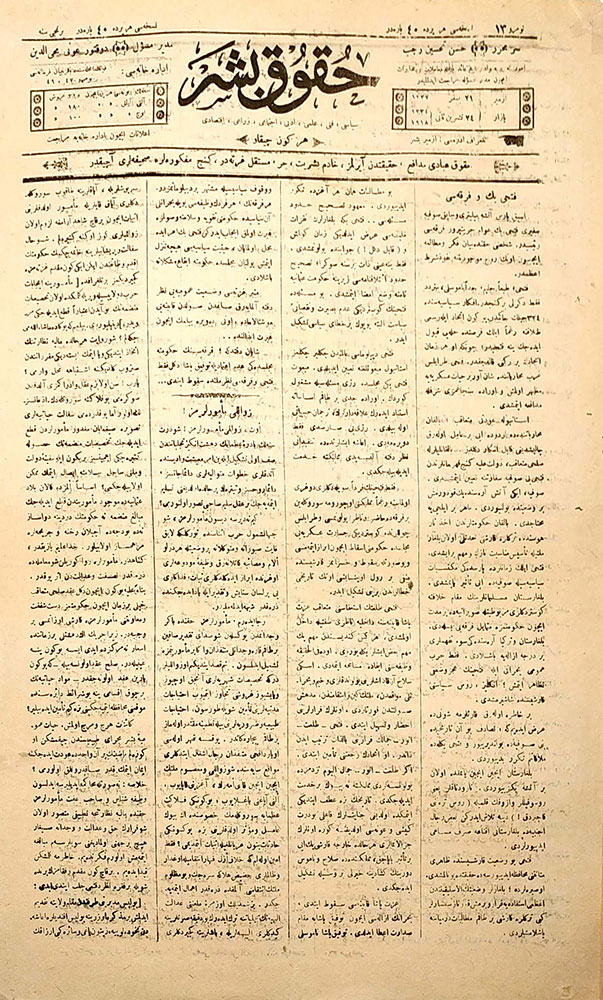
Bu görsel, Hasan Tahsin’in yazılarının da yer aldığı, Hukuk-u Beşer gazetesinin bir sayfasıdır.

Yazının Özeti: Bugün memleketin içine sürüklendiği hâl,
yalnız askerî bir mesele değildir. Bu yaşananlar,
hukukun çiğnenmesi,
insan onurunun ayaklar altına alınmasıdır.

Dünyada insan haklarından söz eden devletler,
aynı anda bir milletin toprağının işgal edilmesine sessiz kalmaktadır. Bu sessizlik, adalet değildir.
Bu sessizlik, zulme ortak olmaktır. Bir milletin hakkı, başkalarının merhametine bırakılamaz.
Hak, ancak irade ile savunulduğunda haktır. Bugün Anadolu’da yapılanlar; hukuk değil, zorbalıktırEğer bir millet susturulursa, adalet de susturulmuş olur. Biz buradan açıkça söylüyoruz: “İnsan hakları, yalnız kâğıt üzerinde yazılı kelimeler değildir. İnsan hakları, milletlerin yaşama hakkıdır. Ve bu hak, işgale sessiz kalınarak korunamaz.”

This visual shows a page from the newspaper Hukuk-u Beşer, which includes writings by Hasan Tahsin.

Summary of the Article:

The state into which the country has been dragged today
is not merely a military matter.
What is taking place
is the violation of law,
the trampling of human dignity.

States that speak of human rights in the world
remain silent at the same time
to the occupation of a nation’s land.
This silence is not justice.
This silence is complicity in oppression. The right of a nation cannot be left to the mercy of others. A right is a right only when it is defended with will. What is being done in Anatolia today is not law, it is tyranny. If a nation is silenced, justice is silenced as well. From here, we state openly: “Human rights are not merely words written on paper. Human rights are the right of nations to live. And this right cannot be protected by remaining silent in the face of occupation.”

Gazeteci Hasan Tahsin’in yazıları, diplomatik dengelere yaslanan temkinli metinler değil; doğrudan adaletsizliği teşhir eden, işgali suç olarak tanımlayan metinlerdir. İnsan haklarından söz eden dünyaya seslenirken, bu hakların Türk yurdunda açıkça çiğnendiğini haykırmıştır.

Hasan Tahsin’in kalemi, “hukuk” kavramını soyut bir ilke olarak değil, milletlerin yaşama hakkı olarak ele alır. Ona göre işgal, hiçbir uluslararası söylemle meşrulaştırılamaz. Bu nedenle yazıları, okuru tarafsız bırakmaz; sessizliği reddeder. Hukuk-u Beşer’de yayımlanan metinler, bir gazeteden çok bir vicdan bildirisi niteliği taşır. Bu yazılar, kalemin artık geri çekilemeyeceği bir noktaya ulaştığını gösterir.

15 Mayıs 1919’da İzmir’de atılan ilk kurşun, bu çizginin kaçınılmaz sonucudur. Hasan Tahsin için kalem ile kurşun arasında bir kopuş yoktur; ikisi aynı direnişin farklı anlarıdır. Önce yazmış, sonra yazının yetmediği yerde bedeniyle direnmiştir. Bu nedenle Hasan Tahsin, yalnızca Milli Mücadele’nin ilk şehidi değil; kalemden kurşuna geçen direnişin sembolüdür.

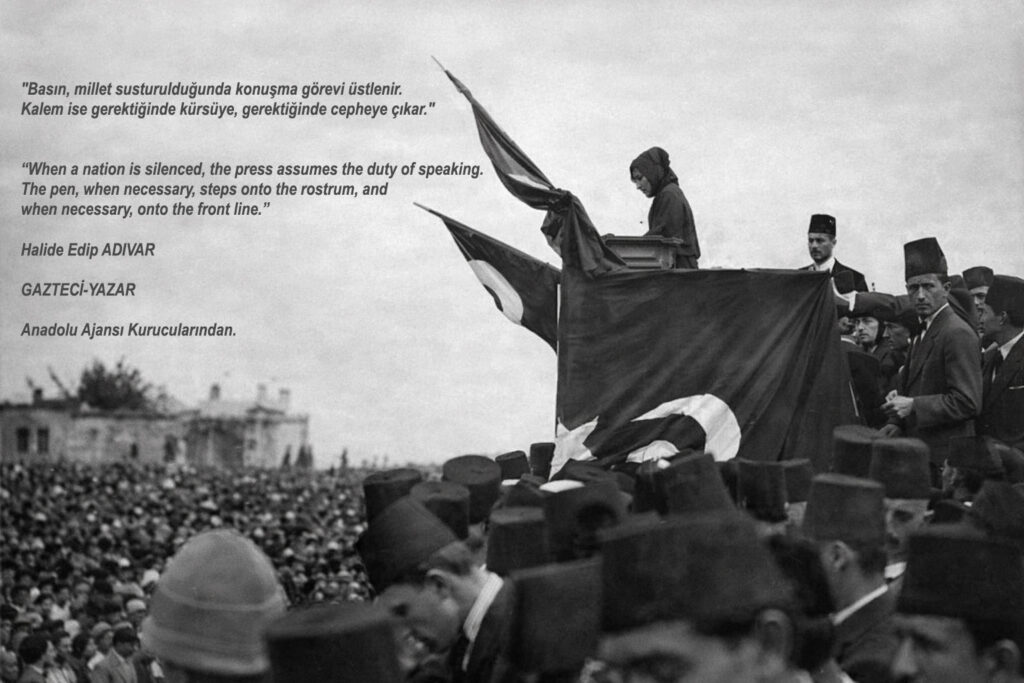
Bu direniş hattının diğer ucunda ise Halide Edip Adıvar yer alır. Halide Edip, Milli Mücadele yıllarında kalemiyle, kürsüsüyle ve sesiyle direnişi örgütlemiş; yazının kitleleri harekete geçirme gücünü ortaya koymuştur. Onun için kalem, yalnızca yazı yazan bir araç değil; milleti ayağa kaldıran bir çağrıdır. Sultanahmet Mitingi’nde kürsüye çıkan sesi, gazetelerde yayımlanan yazılarıyla birleşmiş; kelime, kalabalığa; kalabalık, direnişe dönüşmüştür.

Ve işte bu noktada tarihsel hat tamamlanır:
Halide Edip’te kalem kürsüye çıkar.
Hasan Tahsin’de kalem kurşuna dönüşür.

Biri kalemiyle kitleleri uyandırır, diğeri kalemiyle başladığı direnişi canıyla mühürler. Milli Mücadele basını, bu iki uç arasında şekillenir. Gazetecilik artık bir meslek değil; bedel ödemeyi göze alan bir sorumluluk hâline gelir. Kâğıt bulmanın bile direniş sayıldığı bu yıllarda, yazılan her kelime bir risk, basılan her satır bir meydan okumadır.

Milli Mücadele’de basın, tarihin kenarında duran bir tanık değil; tarihin bizzat kurucu unsurlarından biri olmuştur. Kalem, bu dönemde yalnızca yazmamış; saklanmış, taşınmış, çoğaltılmış, kürsüye çıkmış ve gerektiğinde kurşuna dönüşmüştür. Halide Edip ile başlayan söz, Hasan Tahsin’de eyleme dönüşmüş; Türk basın tarihine silinmeyecek bir miras bırakmıştır.

The writings of journalist Hasan Tahsin are not cautious texts grounded in diplomatic balances; they are texts that directly expose injustice and define occupation as a crime. While addressing a world that speaks of human rights, he cried out that these rights were being openly violated on Turkish soil.

Hasan Tahsin’s pen treats the concept of “law” not as an abstract principle, but as the right of nations to live. According to him, occupation cannot be legitimized by any international discourse. For this reason, his writings do not leave the reader neutral; they reject silence. The texts published in Hukuk-u Beşer are less a newspaper than a declaration of conscience. These writings show that the pen had reached a point from which it could no longer retreat.

The first bullet fired in İzmir on 15 May 1919 is the inevitable result of this line. For Hasan Tahsin, there is no rupture between the pen and the bullet; they are different moments of the same resistance. He wrote first, and when writing was no longer enough, he resisted with his body. For this reason, Hasan Tahsin is not only the first martyr of the National Struggle, but the symbol of a resistance that passed from pen to bullet.

At the other end of this line of resistance stands Halide Edip Adıvar. During the years of the National Struggle, Halide Edip organized resistance with her pen, her presence on the podium, and her voice, revealing the power of writing to mobilize the masses. For her, the pen was not merely a tool that wrote, but a call that raised the nation to its feet. Her voice rising from the podium at the Sultanahmet Rally merged with her articles published in newspapers; the word turned into the crowd, and the crowd into resistance.

And at this point, the historical line is completed:
In Halide Edip, the pen steps onto the podium.
In Hasan Tahsin, the pen turns into a bullet.

One awakens the masses with her pen; the other seals the resistance he began with his pen by giving his life. The press of the National Struggle is shaped between these two poles. Journalism is no longer a profession; it becomes a responsibility undertaken with the willingness to pay the price. In these years, when even obtaining paper counted as resistance, every written word was a risk, every printed line a challenge.

In conclusion, in the National Struggle the press was not a witness standing at the margins of history, but one of history’s very founders. In this period, the pen did not merely write; it was hidden, carried, multiplied, stepped onto the podium, and when necessary turned into a bullet. The word that began with Halide Edip turned into action in Hasan Tahsin, leaving an indelible legacy in the history of the Turkish press.

Gazetecilik, bazen yalnızca olanı yazmak değildir.
Bazen, yazmadığında tarihin yanlış yöne akacağını bilmektir.

İşte bu bilinci taşıyan isimlerden biri…
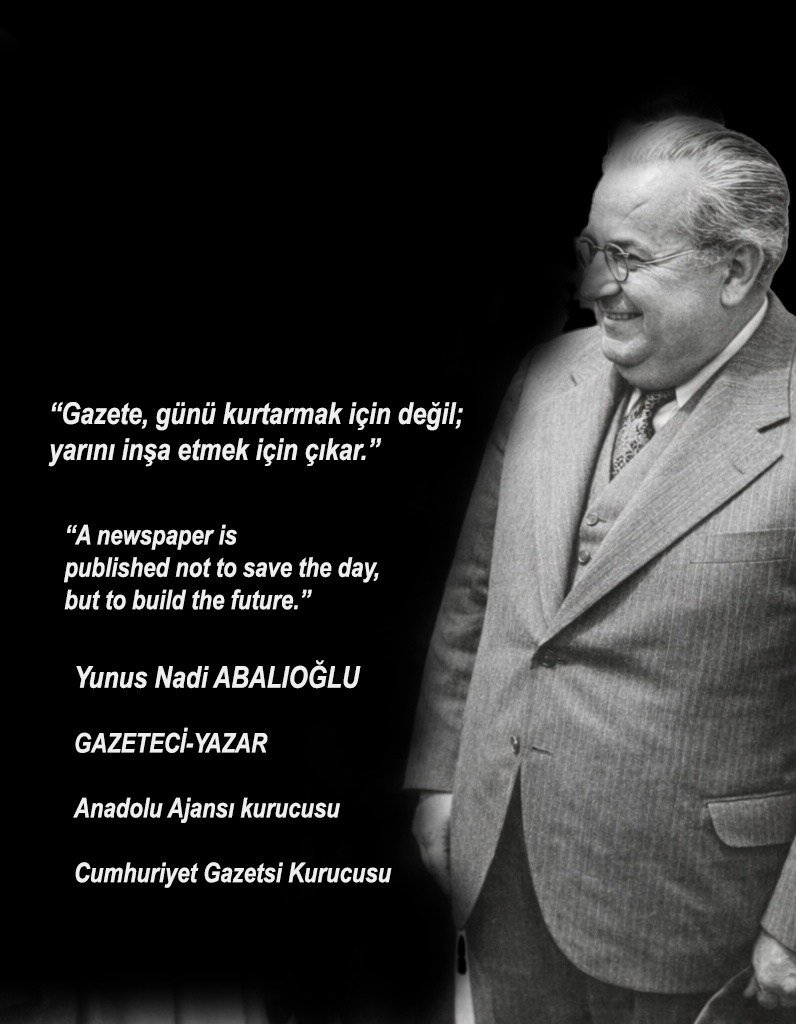
Yunus Nadi.

Osmanlı İmparatorluğu’nun çözülüş yıllarında, kalemini korkusuzca kullanan bir gazeteci.
İşgal altındaki bir ülkede, susmanın da bir tercih olduğunu bilen…
Ama susmamayı seçenlerden.

Yunus Nadi için gazetecilik, tarafsız bir bekleyiş değildi.
O, kalemiyle taraf oldu.
İşgale karşı…
Sessizliğe karşı…
Boyun eğmeye karşı.

İstanbul basınının büyük bir bölümü işgal güçlerinin gölgesinde temkinli satırlar yazarken, Yunus Nadi gerçeği saklamadı. İşgali bir “durum” değil, bir suç olarak gördü ve öyle yazdı. Bu duruş, onun için bedelsiz olmadı. Baskılar arttı.
Yazıları takip edildi. Sonunda İstanbul, onun için artık yazı yazılacak bir şehir olmaktan çıktı.

Ankara’ya geçti.
Henüz başkent olmayan,
Henüz sokaklarında umutla yoksulluğun yan yana yürüdüğü bir şehre…Burada, Mustafa Kemal Atatürk ile aynı fikrî iklimi paylaştı. Savaş yalnızca cephede değil, Bilgide, haberde ve hafızada da kazanılmalıydı. Bu düşünceden doğdu Anadolu Ajansı.

Anadolu Ajansı, Yunus Nadi için bir haber merkezi değil; Milli Mücadele’nin sesi, Anadolu’nun dünyaya açılan kapısıydı. Haber, onun gözünde bir metin değil;
Direnişin kaydıydı. Cumhuriyet’in ilanından sonra da kalemi susturmadı.

1924’te kurduğu Cumhuriyet gazetesiyle, yeni bir ülkenin fikir haritasını çizmeye devam etti.

Laikliği,
Eğitimi,
Çağdaşlaşmayı savundu.

Ama her şeyden önce şuna inandı:
Gazeteci, iktidarın değil,
Toplumun hafızasına karşı sorumludur.

Yunus Nadi’nin gazeteciliği,
Günün manşetinde kalmak için değil; yıllar sonra dönüp bakıldığında “Doğru yerde durmuş” denilsin diye yapıldı. Ve belki de bu yüzden, Onun yazıları yalnızca haber olmadı.
Bir dönemin vicdanı oldu.

Journalism is not always just about writing what happens. Sometimes, it is about knowing that if you do not write, history will flow in the wrong direction.

Here is one of the names who carried this awareness… Yunus Nadi.

A journalist who used his pen fearlessly during the years of the Ottoman Empire’s collapse.
In a country under occupation, he knew that silence itself was a choice…
And he was among those who chose not to remain silent. For Yunus Nadi, journalism was not a neutral waiting.
He took sides with his pen. Against occupation… Against silence… Against submission.

While a large part of the Istanbul press wrote cautious lines under the shadow of the occupying forces, Yunus Nadi did not hide the truth. He did not see the occupation as a “situation,” but as a crime—and he wrote accordingly. This stance was not without cost for him. Pressures increased.
His writings were monitored. Eventually, Istanbul ceased to be a city where he could write.

He moved to Ankara.
Not yet a capital,
A city where hope and poverty walked side by side in its streets…

Here, he shared the same intellectual climate as Mustafa Kemal Atatürk.
The war was not to be won only on the battlefield,
But also in knowledge, in news, and in memory.
From this idea, Anadolu Ajansı was born. For Yunus Nadi, Anadolu Ajansı was not a news center;
It was the voice of the National Struggle,
Anatolia’s window to the world. News, in his eyes, was not merely a text;
It was the record of resistance. After the proclamation of the Republic, he did not silence his pen. With the Cumhuriyet newspaper he founded in 1924, he continued to draw the intellectual map of a new country. He defended secularism,
Education,
Modernization. But above all, he believed in this:
A journalist is responsible not to power,
But to the memory of society.

Yunus Nadi’s journalism was not practiced to remain in the day’s headlines;
It was practiced so that years later, looking back, people would say,
“He stood in the right place.”

And perhaps for this reason,
His writings were not merely news.
They became the conscience of an era.

KAYNAKÇA

Kramer, Samuel Noah – History Begins at Sumer Ong, Walter J. – Orality and Literacy

Eisenstein, Elizabeth – The Printing Press as an Agent of Change

Topuz, Hıfzı – Türk Basın Tarihi

Koloğlu, Orhan – Osmanlı’dan Günümüze Türkiye’de Basın

Çakır, Serpil – Osmanlı Kadın Hareketi

İleri, Rasih Nuri – Hasan Tahsin ve İlk Kurşun

REFERENCES

Kramer, Samuel Noah – History Begins at Sumer
Ong, Walter J. – Orality and Literacy
Eisenstein, Elizabeth – The Printing Press as an Agent of Change
Topuz, Hıfzı – Turkish Press History
Koloğlu, Orhan – Press in Turkey from the Ottoman Era to the Present
Çakır, Serpil – The Ottoman Women’s Movement
İleri, Rasih Nuri – Hasan Tahsin and the First Bullet