“uykum soğuk. Buz kesmekte.”
Rus Kafkas ordusu Kurmay Başkan Vekili, elindeki dürbünü gözlerinden çekemedi, adeta bıraktı, bağırdı.
“delirmiş bu Türkler! Böylesi açık hedef olunur mu? Türkler gibi asker yoktur doğru ama bu ne acemilik! bu ne akılsızlık!
Mevzilenmeye ihtiyaç duymadan açık hedef olmuşlar”
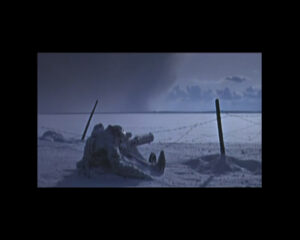
Yıllardan 1914, günlerden 23 aralık Cuma, bizim cepheden hiç ateş açılmadı. Gece yerini sabah ışıklarına terk ettiği zaman Rus Kurmay Başkan vekili şaşkınlık içinde önce ateş emrini verir. Sonra almıştır eline dürbününü. Dünya tarihinin görmediği sahneye işte o zaman şahit olur. İlk sırada, diz çökmüş 5 kahraman… Omuz çukurlarında yuvalanmış mavzerleri ile nişan almışlar. Tetiğe asılmak üzereler… asılamamışlar. Kaputta yakaları Allah’ın rahmetini O civan delikanlıların vücuduna akıtmak istercesine semaya dikilmiş kaskatı… Hele bıyıkları…hele bıyık ve sakalları… her biri birere fütuhat oku gibi dimdik. Ve gözleri… Dinmiş olmasına rağmen kahredici tipinin bile örtüp gizleyip kapatamadığı gözleri…hepsi açık Tabiata, başkumandana, karşıdaki düşmana ve kadere isyan eden ama Allah’ına teslimiyetle bakan gözleri açık… vallahi açık… açık…”
Kader mi; Karar mı?
Sarıkamış…
Bu isim,
yalnızca bir yer adı değildir.
Bu isim,
bir sorudur.
Bu dağlarda yaşananlar,
kader miydi?
Yoksa kader dediğimiz şey,
başkaları adına verilen kararların
bedeli miydi?
1914 yılı…
Dünya, büyük bir savaşın içine sürüklenmişti. İmparatorluklar çöküyor,
haritalar yeniden çiziliyordu. Osmanlı Devleti, bu fırtınanın tam ortasındaydı. Yorgundu. Yaralıydı ama hâlâ ayaktaydı.
Ve işte tam bu noktada, bir karar alındı. Sarıkamış Harekâtı…Bu karar, cephede değil, harita başında verildi. Bu karar, askerin değil, zamanın ve hayallerin acele ettiği bir karardı.Resmî kayıtlara göre bir askerî taarruz. Tarih, bazen kelimelerden daha fazlasını söyler. Çünkü Sarıkamış, yalnızca düşmana karşı yapılan bir yürüyüş değildir. Sarıkamış, soğuğa, zamana, coğrafyaya ve gerçeğe karşı yapılan bir yürüyüştür. Bu yürüyüşe çıkan askerler, neden yürüdüklerini biliyorlardı. Ama bu yürüyüşün nereye varacağını bilmiyorlardı.
Onlara, dağların ne kadar yüksek olduğu söylenmedi. Ayazın ne kadar acımasız olduğu anlatılmadı.
Ve en önemlisi…
geri dönmenin mümkün olmayabileceği hiç söylenmedi.
Kimlerin konuştuğunu… kimlerin susturulduğunu… Kimlerin uyardığını… kimlerin dinlemediğini… nereden bilecekti bir lokma sokumu ve yarım çarıkla öne sürülen Mehmetçik.
Sarıkamış’ta sadece canlar ölmedi. Gerçekler de dondu.
1914’ten önce…
Osmanlı Devleti yenilgilerle sarsılmıştı. Balkanlar kaybedilmişti. İmparatorluğun itibarı zedelenmişti.
Bu yıkıntının ortasında, genç bir subay yükseliyordu. Adı Enver Paşa. Gençti. Hırslıydı… Ve tarihin kendisine bir rol verdiğine inanıyordu.
Enver Paşa için bu savaş, sadece bir savunma değildi. Bu savaş, imparatorluğu yeniden ayağa kaldırma fırsatıydı. Bu düşüncenin adı vardı: Turan.
Turan, Anadolu’dan Kafkaslar’a, Azerbaycan’dan Orta Asya’ya uzanan büyük bir birlik hayaliydi. Kâğıt üzerinde bu hayal, imparatorluğun kaybettiği gücü Doğu’da yeniden kazanma vaadiydi. Ama hayallerin bir ağırlığı vardır. Ve bu ağırlık, en çok onu taşıyanı ezer. Enver Paşa, bu hayali yalnızca İstanbul’da kurmadı. Berlin’de de dillendi.
Berlin’de, Avrupa’nın askerî salonlarında, genç Osmanlı paşası dikkatle izlendi. Alman subaylar onu takdir etti. Saray çevreleri onu yüceltti. Ona söylenen söz, bir iltifattan fazlasıydı:
“Geleceğin Napolyon’u…”
Bu söz, bir övgüydü. Ama aynı zamanda bir yönlendirmeydi. Çünkü Almanya, iki cephede birden savaşmanın yükünü taşıyordu. Batı’da Fransa ve İngiltere,
Doğu’da Rusya… Alman stratejisi açıktı:
“Rus ordusu, mümkün olduğunca Doğu’da tutulmalıydı.”
bu iş için ise Osmanlı ordusu çok uygundu, kullanılabilirdi Enver Paşa’nın Turan hayali, bu stratejiyle örtüştü.
Hızlı bir taarruz…
Büyük bir başarı…
Tarihe geçecek bir zafer…
Ama haritalar, hayaller kadar cömert değildir. Kafkaslar, kağıt üzerinde kısa bir yol gibi görünüyordu. Oysa orası, kışın ortasında insanı affetmeyen bir coğrafyaydı. Bu gerçek,
yavaş yavaş fısıldandı. Hayaller, fısıltıları duymaz.
Enver Paşa için zaman daralıyordu. Beklemek, hayalin erimesi demekti. Böylece, Turan düşüncesi bir askerî plana dönüştü. Bu planın adı,“Sarıkamış’tı.”
Henüz dağlara çıkılmamıştı.
Henüz kar yağmamıştı.
Henüz asker yürümemişti.
Karar alındı. Sarıkamış, dağlarda başlamadı. Sarıkamış, işte burada, bir hayalin gerçekle yüzleşmediği noktada başladı.
1914’te savaşın kaderi, cephelerde değil, zamanla ölçülüyordu. Zaman ise, Almanya için hayatiydi. Batı’da Fransa ve İngiltere… Doğu’da Rusya… Almanya, iki cephede birden savaşmanın ağırlığını hissediyordu. Bu yüzden Alman Genelkurmayı’nın tek bir önceliği vardı:
“Rus ordusunu, Batı’dan uzak tutmak. Onları meşgul etmek…Onları oyalamak…”
Mümkünse, Doğu’da tutmak.
Bu stratejinin adı, kâğıt üzerinde bir zafer planı değildi. Bu, zaman kazanma planıydı. Ve bu plan için, bir ortak gerekiyordu. Osmanlı Devleti… Almanya için Osmanlı, eşit bir askerî güç değildi. Ama kullanışlıydı. Coğrafyasıyla… Cephe genişliğiyle…
Ve askerinin fedakârlığıyla…
Fate; or Decision?
Sarıkamış…
This name
is not merely a place name.
This name
is a question.
What happened in these mountains—
was it fate?
Or was what we call fate
the price of decisions made
on behalf of others?
The year is 1914…
The world had been dragged into a great war. Empires were collapsing,
maps were being redrawn. The Ottoman State stood at the very center of this storm. It was tired. It was wounded, but it was still standing.
And it was precisely at this moment that a decision was made. The Sarıkamış Operation… This decision was not made on the battlefield, but at the map table. It was not a decision rushed by soldiers, but one hurried by time and dreams. According to official records, it was a military offensive.
History, however, sometimes says more than words.
Because Sarıkamış is not merely a march against the enemy.
Sarıkamış is a march against the cold, against time, against geography, and against reality. The soldiers who set out on this march knew why they were marching. But they did not know where this march would lead.
They were not told how high the mountains were.
They were not told how merciless the frost would be.
And most importantly… they were never told that returning might not be possible. How could the Mehmetçik, pushed forward with a single bite of bread and a torn shoe, know who spoke… who was silenced… who warned… who was not listened to? At Sarıkamış, not only lives died. Truths froze as well.
Before 1914…
The Ottoman State had been shaken by defeats.
The Balkans had been lost.
The empire’s prestige had been damaged.
In the midst of this wreckage, a young officer was rising.
His name was Enver Pasha. He was young. He was ambitious… And he believed that history had assigned him a role. For Enver Pasha, this war was not merely a defense. It was an opportunity to raise the empire back to its feet. This idea had a name: Turan.
Turan was the dream of a great unity stretching from Anatolia to the Caucasus, from Azerbaijan to Central Asia.
On paper, this dream promised the recovery of the empire’s lost power in the East. But dreams have weight.
And that weight crushes most heavily the one who carries it. Enver Pasha did not dream this dream only in Istanbul. He voiced it in Berlin as well. In Berlin, in Europe’s military salons, the young Ottoman pasha was watched closely. German officers admired him. Court circles exalted him. The words spoken to him were more than a compliment:
“The Napoleon of the future…”
These words were praise. But they were also direction.
Because Germany was bearing the burden of fighting on two fronts. In the West, France and England.
In the East, Russia… The German strategy was clear:
“The Russian army had to be kept in the East as much as possible.”
And for this task, the Ottoman army was very suitable.
It could be used. Enver Pasha’s Turan dream overlapped with this strategy.
A rapid offensive…
A great success…
A victory that would go down in history…
But maps are not as generous as dreams.
The Caucasus looked like a short route on paper.
In reality, it was a geography that did not forgive humanity in the middle of winter. This truth was whispered slowly. Dreams do not hear whispers. For Enver Pasha, time was running out. To wait meant the melting of the dream. Thus, the idea of Turan turned into a military plan. The name of this plan was “Sarıkamış.”
The mountains had not yet been climbed.
The snow had not yet fallen.
The soldiers had not yet marched.
The decision was made. Sarıkamış did not begin in the mountains. Sarıkamış began right here at the point where a dream did not confront reality. In 1914, the fate of the war was not measured on the fronts, but by time. And time was vital for Germany. In the West, France and England… In the East, Russia… Germany felt the weight of fighting on two fronts. Therefore, the German General Staff had only one priority:
“To keep the Russian army away from the West.
To occupy them…
To delay them…”
If possible, to keep them in the East. The name of this strategy was not a victory plan on paper. It was a plan to buy time. And for this plan, a partner was needed. The Ottoman State… For Germany, the Ottoman Empire was not an equal military power.
But it was useful.
With its geography…
With the width of its fronts…
And with the sacrifice of its soldiers…
————————————————————————–
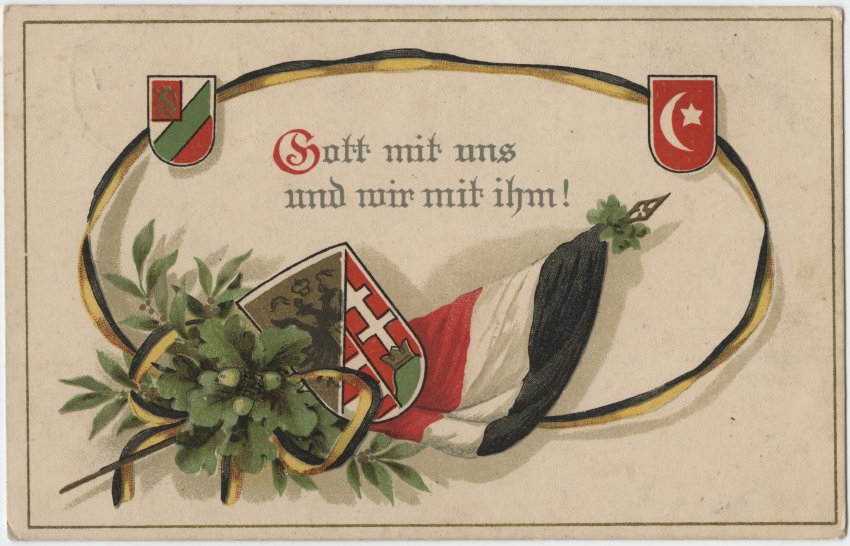
Bu bir emir belgesi değil… Bu bir propaganda kartıdır.
Üzerinde Almanca şu yazı vardır:
“Gott mit uns und wir mit ihm.”
Yani:
“Tanrı bizimle ve biz de O’nunlayız.”
Bir Alman arması… Bir Osmanlı bayrağı…
Mesaj açıktır: Bu savaş, iki devletin değil, Tanrı’nın savaşıdır. Ama bu belgede kar yoktur… ayaz yoktur… Allahuekber Dağları yoktur… Sadece kutsallık vardır. Ve bazen, en tehlikeli belgeler emir verenler değil, inandıranlardır.
————————————————————————
—————————————————————————
It is not an order document…
This is a propaganda card.
Written on it in German are the words:
“Gott mit uns und wir mit ihm.”
That is to say:
“God is with us, and we are with Him.”
A German coat of arms… An Ottoman flag…
The message is clear: This war is not the war of two states, but the war of God. But on this document there is no snow… there is no frost… there are no Allahuekber Mountains… There is only sanctity. And sometimes, the most dangerous documents are not those that give orders, but those that persuade.
————————————————————————–
Alman askerî raporlarında bu gerçek açıkça görülür. Bu rapaorlar olayans bu bedeli kimin ödeyecedir.
Berlin’de hazırlanan planlarda, Osmanlı ordusunun görevi netti: “Kafkasya’da harekete geçmek…Rus birliklerini oraya bağlamak…Batı Cephesi’ni rahatlatmak.”
Bu planın başarısı, Osmanlı’nın kazanmasına bağlı değildi.
Harekâtın başlaması, başarı için yeterliydi. İşte bu noktada, askerî gerçeklerle siyasal beklentiler ayrıldı. Osmanlı için Sarıkamış, bir kazanım umuduydu. Almanya için ise, bir dikkat dağıtma hamlesi. Ve bu iki beklenti, aynı haritada yan yana duruyordu. Ama aynı bedeli paylaşmıyordu.
Alman subaylar, kış şartlarını biliyordu. Coğrafyayı tanıyorlardı. Ve bu coğrafyada yürümeyeceklerdi. Bu yüzden raporlarda soğuk ayrıntıdır… Dağlar, bir dipnottur… İnsan kaybı ise, hesap dışıdır.
Bu sessizlik, bilgisizlikten değil, tercihten doğdu. Çünkü Alman planı için en tehlikeli şey, harekâtın iptal edilmesiydi.
İptal edilmenin şartıysa gerçeğin yüksek sesle söylenmesi olurdu. Bu yüzden,
itirazlar sustu, susturuldu.
Uyarılar ertelendi…
Ve gerçekler,
taarruz ruhunun gerisine itildi.
Sarıkamış, bu noktada bir Osmanlı harekâtı olmaktan çıktı. Sarıkamış, büyük bir savaşın içinde
küçük bir zaman kazanma hamlesine dönüştü.
Tarih ise şunu not etti: Kazanan,zamanı kazanan oldu. Kaybedense zamanı olmayanlar…”
Erzurum…
Sarıkamış’a giden yolun ilk durağı değil, son hazırlık noktasıydı.
Erzurum’a gelen ordu, hazır değildi.
Osmanlı 3. Ordusu, haftalar süren yürüyüşlerle Erzurum’a ulaştı. Kimi zaman patika yollardan… Kimi zaman hayvan sırtında… Kimi zaman açlıkla…
Demiryolu yoktu. Yol yoktu. Zaman yoktu.
Asker,Erzurum’a geldiğinde bir savaşı bitirmiş gibiydi. Oysa asıl yürüyüş, daha başlamamıştı.
Bu askerler:
— Dinlenmeliydi.
— Beslenmeliydi.
— Giydirilmeliydi.
Ama hiçbirine yeterince zaman ayrılmadı. Çünkü Erzurum, bir bekleme yeri değil, bir geçiş noktası olarak görülüyordu. Kış kendini göstermeye başlamıştı. Kar yağıyordu. Ayaz sertleşiyordu. Ve bu şehirde,
bir sessizlik vardı. Bu sessizlik, rahatlıktan değil, bekleyişten doğuyordu. Bazı komutanlar durumu gördü.
Askerin hâlini…
Giysilerin yetersizliğini…
İaşenin sınırlılığını…
Bu sessizliğin içinde, uyarılar yükseldi. Ama uyarılar, karar kadar hızlı değildi. Erzurum’da, iki farklı zaman akıyordu. Biri, haritaların zamanıydı. Diğeri, askerin zamanı… Ve bu iki zaman, birbirini yakalayamadı.
Karar merkezleri için Erzurum, Sarıkamış’a giden kısa bir duraktı. Asker içinse, son nefes alma yeriydi. Bu şehirde, askerler ilk kez gerçek soruyu sormaya başladı:
“Biz nereye gidiyoruz?” bu sorunun cevabı,
haritalarda vardı. Askerde değil!
Çok geçmeden, o cevap tek bir cümleye dönüştü:
“Derhal yürüyüşe geçilecektir.”
Bu cümle, Erzurum’da söylendi. Ama yankısı, Allahuekber Dağları’nda duyuldu.
Erzurum’da herkes suskun değildi.
Bazıları, olacakları görüyordu. Bu isimlerden biri, Osmanlı 3. Ordusu’nun komutanı Hasan İzzet Paşa’ydı. Paşa, bu coğrafyayı tanıyordu. Kışı biliyordu. Askerin hâlini görüyordu.
Ve açıkça söyledi:
“Bu ordu, kış şartlarında büyük bir taarruz yapamaz. Beklenmelidir. Bahar gelmelidir. Asker toparlanmalıdır.”
Bu sözler, bir korkunun değil,bir tecrübenin sözleriydi. Bu sözler, karar masasında yankı bulmadı. Çünkü beklemek, zaman kaybetmek demekti. Ve zaman, başkalarının planlarında en değerli şeydi.
Bir başka uyarı, cepheden değil, lojistikten geldi. Bu uyarının sahibi, ulaştırma ve sevkiyatın dilini bilen bir subaydı Kurmay Binbaşı Behiç Beydi.
Kurmay Binbaş Behiç Bey hayallere, çıkarlara değil, yollara bakıyordu. Demiryolu yoktu. Erzurum’dan sonrası, dağ patikalarıydı. Bu yollar, yazın bile zordu. Kışın ise, ölümcüldü.
Kurmay Bin baş Behiç Bey şunu söyledi:
“Bu kadar büyük bir ordu, bu şartlarda beslenemez… giydirilemez…taşınamaz. Bu bir tahmin değil.
Bu, hesaptır, gerçektir!”
Ama hesap ve gerçek cesaretin önüne geçtiğinde rahatsızlık yaratır. Uyarılar çoğaldıkça, sesler kısıldı. Çünkü bu uyarılar, harekâtın başlamasını geciktirebilirdi. Ve gecikme, planın bozulması demekti. Hasan İzzet Paşa, bu sorumluluğu üstlenmek istemedi. Görevinden ayrıldı. Kurmay Binbaş Behiç Bey ise karar sürecinin dışına itildi.
Biri çekildi…
Biri susturuldu…
Ama gerçekler, çekilmedi.
Erzurum’da, iki ses vardı artık. Biri, emrin sesi. Diğeri, içine gömülen uyarıların sessizliği. Ve bu sessizlik, çok geçmeden dağlarda konuşacaktı.
Uyarılar vardı. Ama dinlenmedi. Gerçekler biliniyordu. Ama konuşulmadı. Sarıkamış’a giden yol,
bilgisizlikten değil, bilinenlerin bastırılmasından geçti. Erzurum’da artık tek bir ses hâkimdi. Bu ses,
itiraz istemiyordu. Çünkü itiraz, tereddüt demekti. Tereddüt ise, emrin gecikmesi… Ve gecikme,
başkalarının planlarında abul edilemezdi. Karar verildiğinde, artık hesap yapılmıyordu. Hesap yapanlar,
geri çekilmişti. Kışın ne kadar sert olacağı biliniyordu. Askerin ne durumda olduğu görülüyordu.
Yolların kapanacağı tahmin ediliyordu. Ama bütün bu bilgiler, raporların alt satırlarında kaldı. Üst satırlarda ise, başka kelimeler vardı:
“Kararlılık…”
“Cesaret…”
“Fedakârlık…”
Bu kelimeler, gerçeğin önüne geçti. Gerçek, taarruz ruhuna aykırı sayıldı. Artık mesele,
askerin dayanıp dayanamayacağı değil, harekâtın başlayıp başlamayacağıydı. Bu noktada, Sarıkamış bir askerî plan olmaktan çıktı.
Sarıkamış, geri dönüşü olmayan bir irade gösterisine dönüştü. İtiraz edenler,
ya çekildi…
ya sustu…
ya da susturuldu.
“Derhal yürüyüşe geçilecektir.”
Bu cümle, Erzurum’da kuruldu. Ağırlığıysa dağlara taşındı. Asker için bu emir,
bir tartışma konusu değildi. Asker, nedenini sormazdı. Asker, emri yerine getirirdi. Ama bu emir,
alışıldık bir cephe emri değildi. Bu emir, dinlenmeden yürümeyi emrediyordu. Soğuğa rağmen ilerlemeyi… Hazırlıksız olmayı göze almayı…
Bu emrin verildiği anda, Sarıkamış artık bir ihtimal değildi. Sarıkamış, bir zorunluluk hâline getirildi. Emir verildiğinde, askerin üzerinde hâlâ yazlık kaputlar vardı. Ayaklarında, kışa uygun olmayan çarıklar… Sırtlarında, yetersiz yük… Bu ayrıntılar, emrin metninde yoktu. Bu emir, detaylara değil, itaate dayanıyordu.
Yürüyüş başladı. Sessizce…
Ne marş vardı…
Ne nutuk…
Ne alkış…
Sadece ayak sesleri…
Her adımda, bir geri dönüş ihtimali daha geride kaldı. Bu yürüyüşte, asker yalnız değildi. Yanında,
emrin gölgesi vardı. Ve bu gölge, uzadıkça uzadı. Artık Sarıkamış, haritaların üzerinde değil, askerin nefesinde ilerliyordu.
This reality is clearly seen in German military reports.
These reports show who would pay the price for what happened. In the plans prepared in Berlin, the task of the Ottoman army was clear: “To move in the Caucasus… to tie down Russian forces there… to relieve the Western Front.”
The success of this plan
did not depend on the Ottoman Empire winning.
The beginning of the operation was sufficient for success. It was at this point that military realities and political expectations diverged. For the Ottoman Empire, Sarıkamış was a hope of gain. For Germany, it was a diversionary move. And these two expectations stood side by side on the same map. But they did not share the same cost.
German officers knew the winter conditions. They knew the geography. And they would not be the ones marching through it. That is why, in the reports, the cold was a detail… the mountains were a footnote… human loss was beyond calculation.
This silence was not born of ignorance, but of choice. Because for the German plan, the most dangerous thing was the cancellation of the operation. And the condition for cancellation would have been the truth being spoken aloud. For this reason, objections fell silent, or were silenced.
Warnings were postponed… And realities were pushed behind the spirit of the offensive. At this point, Sarıkamış ceased to be an Ottoman operation.
Sarıkamış turned into a small time-gaining maneuver within a great war. And history recorded this: The winner was the one who gained time. The loser was those who had none…
Erzurum…
It was not the first stop on the road to Sarıkamış, but the final point of preparation.
The army that arrived in Erzurum was not ready.
The Ottoman Third Army reached Erzurum after weeks of marching. Sometimes along narrow paths… Sometimes on the backs of animals… Sometimes through hunger…
There was no railway.
There were no proper roads.
There was no time.
When the soldier arrived in Erzurum, he seemed as if he had already finished a war. Yet the real march had not even begun.
These soldiers
needed to rest.
They needed to be fed.
They needed to be clothed.
But none of these were given sufficient time. Because Erzurum was seen not as a place of waiting, but as a point of passage. Winter had begun to show itself. Snow was falling. The frost was hardening. And in this city, there was a silence. This silence was not born of comfort, but of waiting.
Some commanders saw the situation.
The condition of the soldiers…
The inadequacy of their clothing…
The limits of their provisions…
Within this silence, warnings began to rise. But warnings were not as fast as decisions. In Erzurum, two different times were flowing. One was the time of the maps. The other was the time of the soldier. And these two times could not catch up with one another.
For the decision centers, Erzurum was a short stop on the road to Sarıkamış. For the soldier, it was the last place to catch his breath.
In this city, the soldiers began to ask the real question for the first time: “Where are we going?”
The answer to this question was on the maps. Not with the soldier. Before long, that answer turned into a single sentence: “March will commence immediately.” This sentence was spoken in Erzurum. But its echo was heard in the Allahuekber Mountains.
Not everyone in Erzurum was silent.
Some saw what was coming. One of these was the commander of the Ottoman Third Army, Hasan İzzet Pasha. The Pasha knew this geography. He knew the winter. He saw the condition of the soldiers.
And he said it openly:
“This army cannot carry out a major offensive under winter conditions. We must wait. Spring must come. The army must recover.”
These words were not words of fear, but of experience. But these words found no echo at the decision table. Because waiting meant losing time. And time was the most valuable thing in other people’s plans.
Another warning came not from the front, but from logistics. The owner of this warning was an officer who knew the language of transport and supply Staff Major Behiç Bey. Staff Major Behiç Bey did not look at dreams or interests, but at roads. There was no railway. Beyond Erzurum lay mountain paths. These roads were difficult even in summer. In winter, they were deadly.
Staff Major Behiç Bey said:
“An army this large cannot be fed… cannot be clothed… cannot be transported under these conditions. This is not a prediction. This is calculation. This is reality.”
But when calculation and reality stand in front of courage,
they create discomfort. As warnings multiplied, voices were lowered. Because these warnings could delay the start of the operation. And delay meant the plan falling apart.
Hasan İzzet Pasha did not wish to bear this responsibility.
He resigned from his post. Staff Major Behiç Bey, on the other hand, was pushed out of the decision-making process.
One withdrew…
One was silenced…
But realities did not withdraw.
In Erzurum, there were now two voices. One was the voice of the order. The other was the silence of buried warnings. And this silence would soon speak in the mountains. Warnings existed. But they were not heeded. Realities were known. But they were not spoken. The road to Sarıkamış was paved not by ignorance, but by the suppression of what was known. In Erzurum, a single voice now prevailed. This voice did not want objections. Because objection meant hesitation. Hesitation meant delay of the order. And delay, in other people’s plans, was unacceptable. Once the decision was made, no more calculations were done. Those who calculated had withdrawn. It was known how harsh the winter would be. The condition of the soldiers was clearly seen. It was predicted that the roads would close. But all this information remained in the lower lines of the reports. In the upper lines, there were other words:
“Determination…”
“Courage…”
“Sacrifice…”
These words came before reality. Reality was considered contrary to the spirit of the offensive. Now the issue was not whether the soldier could endure, but whether the operation would begin. At this point, Sarıkamış ceased to be a military plan. Sarıkamış turned into a demonstration of will with no return. Those who objected
either withdrew…
or fell silent…
or were silenced.
“March will commence immediately.” This sentence was formed in Erzurum. Its weight, however, was carried to the mountains. For the soldier, this order was not a matter of debate. The soldier did not ask why. The soldier carried out the order. But this order was not a familiar front-line command. This order commanded marching without rest. Advancing despite the cold… Accepting unpreparedness… At the moment this order was given, Sarıkamış was no longer a possibility.
Sarıkamış was turned into a necessity. When the order was issued, the soldiers were still wearing summer coats. On their feet, shoes unsuitable for winter… On their backs, insufficient loads… These details did not exist in the text of the order. This order was based not on details, but on obedience. The march began. Silently…
There was no march…
No speech…
No applause…
Only the sound of footsteps…
With every step, one more possibility of return
was left behind. On this march, the soldier was not alone. Beside him was the shadow of the order. And as this shadow stretched, it grew longer and longer. Sarıkamış was no longer advancing on maps, but in the soldier’s breath
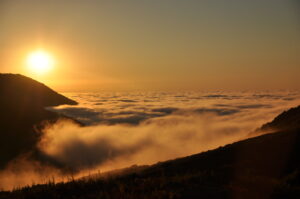
Dağlar…
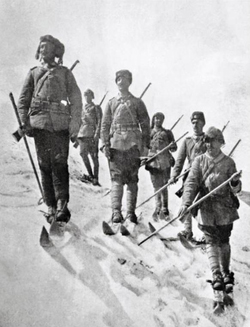
Haritalarda bir çizgi, gerçekte bir duvardı. Allahüekber Dağları, yüzyıllardır oradaydı. Kimseye düşman değildi. Ama kimseyi de affetmezdi. Yürüyüş buradan başladı. Kar diz boyuydu. Ayaz, kemiğe işliyordu.
Rüzgâr, yönü siliyordu.
Asker, önündekinin ayak izine basarak ilerliyordu. Bir an durmak, geri kalmak demektiGeri kalmak, kaybolmak demekti. Ve kaybolmak, ölmek…
Bu dağlarda, zaman kavramı yoktu. Gün ve gece, birbirine karıştı. Saatler ilerlemedi. Sadece soğuk arttı. Bir asker düştü. Bir başkası durdu. Durmak, dinlenmek için değildi. Durmak, donmaktı.
Bu yürüyüşte, ilk kayıplar düşman ateşiyle verilmedi. Kurşun yoktu. Top yoktu. Sadece ayaz vardı. Askerler, birbirlerini uyandırmaya çalıştı. Uyku, bu dağlarda en tehlikeli şeydi. Gözler kapanınca, geri açılmıyordu. Bir süre sonra, komutlar duyulmaz oldu. Çünkü rüzgâr, her sesi yuttu. Birlikler dağıldı. Yollar kayboldu. Ve dağlar, her adımı ayrı ayrı yuttu. Bu yürüyüşte, kahramanlık yoktu. Bu yürüyüşte, direnç vardı. Ve direncin bir sınırı… Allahüekber Dağları, bu sınırı çizdi. Yürüyüş devam etti. Ama artık herkes, aynı yere gitmiyordu. Kimisi Sarıkamış’a… Kimisi, toprağın don yüzüne…
Bir süre sonra, sesler azaldı. Bağıran yoktu… Komut veren yoktu… Yardım isteyen yoktu…
Dağlar, konuşmayı bırakmıştı. Allahuekber Dağları’nda, ölüm gürültüyle gelmedi. Sessizlikle geldi. Askerler, düştükleri yerde kaldı. Bazıları diz çökmüş hâlde… Bazıları tüfeğine yaslanmış…Bazıları, adım atacakmış gibi… Gözleri açıktı.
Bu bir kaçış değildi. Bu bir teslimiyet de değildi. Bu, insanın gücünün tabiat karşısında sona erdiği andı. Birlikler birbirini kaybetti. Subaylar askerini bulamadı. Askerler yollarını… Artık haritaların bir anlamı yoktu. Çünkü bu dağlarda, yol yoktu. Soğuk, rütbe tanımıyordu. Aynı ayaz, hem eri hem subayı eşitliyordu. Bu sessizlikte, zaman da durdu. Günler mi geçti, saatler mi… Bunu bilen olmadı.
Bilen tek şey vardı:
Geri dönüş yoktu.
Bir süre sonra, hareket edenler azaldı. Hareket etmeyenler ise, birer manzaraya dönüştü. İnsan, bu kadar sessiz ölebilirdi demek. Bu sessizlik, bir yenilginin sesi değildi. Bu sessizlik, hiç yapılmaması gereken bir yürüyüşün ardından gelen ağıttı. Ve Sarıkamış’a giden yol, artık askerle değil, hatıralarla doluydu.
Tanıklık: Görülen ve Yazılan.
Gece çekildiğinde, karın altından başka bir manzara çıktı. Karşı yamaçta, Rus Kafkas Ordusu Kurmay Başkan Vekili Dük Aleksandroviç Pietroviç dürbününü gözlerinden indirmedi. Bu subayın gördüğü şey, bir askerî başarı değildi.
Gördüğü şey, bir savaş manzarası değildi. İlk sırada, diz çökmüş askerler vardı.Tüfekleri omuzlarında…
Nişan alır gibiydiler. Ama tetiğe basmamışlardı. Basamamışlardı. Kaputları sertleşmişti. Yakaları donmuştu. Bıyıkları, ok gibi yukarı kalkmıştı. Ve gözleri… Gözleri açıktı. İkinci sırada, katırların yanında duran askerler vardı. Sandıkları kavramışlardı. Bırakmamışlardı. Yüklerini yere atmamışlardı. Ayakta kalan bir subay vardı. Başı açıktı. Saçları beyaza kesmişti. Bir eli dürbününde donmuştu. Diğer eli, semaya kalkmış gibi…
Rus subayı, ateş emri verdi. Ama bu emir, bir savaş emri olmadı. Çünkü karşısında, savaşan bir ordu yoktu. Karşısında, ölümü tamamlamış bir yürüyüş vardı. Bu manzara, Rus subayının raporuna girdi.
Moskova’ya gönderilen o raporda, şu cümle yer aldı:
“Allahuekber Dağları’ndaki son Türk müfrezesini teslim alamadım. Bizden çok önce, Allah’larına teslim olmuşlardı.”
Bu bir askerî rapor değildi. Bu, bir tanıklıktı. Ve bazen, tarihin en ağır cümleleri, düşmanın kaleminden çıkar. Bu rapor Rusya’daki tarihî askerî (Russian State Military Archive ) arşivlerde saklanmaktadır.
Sarıkamış… Bu dağlarda, gençler yürüdü. Sorgulamadılar. Tereddüt etmediler. Çünkü onlara öğretilen buydu. Ama onları buraya getiren kararlar, sorgulanmalıydı. Sarıkamış, askerin hatası değildi. Sarıkamış,
itaatin bedeliydi. Bu yürüyüşte, kimse geri dönmeyi düşünmedi. Çünkü geri dönmek, emre aykırıydı. Ve bazı emirlere, hayat bile yetmez. Bugün bu dağlarda sessizlik varsa, bu bir unutuluş değildir. Bu sessizlik,
bir hatırlatmadır. Her adımda…Her rüzgârda… Her kar tanesinde…Bu topraklar şunu fısıldar:
“Asker ölümü göze alır. Ama gereksiz ölümü değil. Sarıkamış’ta yatanlar, bir yenilginin değil, bir ihmalin şehitleridir. Onlar, sorulmayan soruların cevabıdır.”
Sarıkamış, bir daha yaşanmasın diye hatırlanmalıdır. Bu dağlarda kalanlara, bir dua borcumuz var. Bir de söz… Bir daha, gerçekler susturulmasın diye.
“Sarıkamış…
Kader miydi bu yazılanlar?
Yoksa kader dediğimiz şey, hayaller uğruna atılan imzalar mıydı? Bu dağlarda donan yalnızca asker değildi… Gerçekler de dondu. Ve bazı gerçekler, emre uymadığı için susturuldu.”
Mountains…
On maps, a line; in reality, a wall.
The Allahüekber Mountains had been there for centuries.
They were enemies to no one. But they forgave no one either. The march began here. The snow was knee-deep. The frost pierced to the bone. The wind erased direction. The soldier advanced by stepping into the footprints of the one ahead. To stop for a moment meant to fall behind. To fall behind meant to get lost. And to get lost meant to die…
In these mountains, there was no sense of time. Day and night blended into one another. Hours did not move forward. Only the cold increased. One soldier fell. Another stopped. Stopping was not to rest. Stopping was to freeze.
On this march, the first losses were not caused by enemy fire. There were no bullets. No artillery. There was only frost. Soldiers tried to wake one another. Sleep, in these mountains, was the most dangerous thing. When eyes closed, they did not open again. After a while, commands could no longer be heard. Because the wind swallowed every sound. Units scattered. Paths disappeared. And the mountains swallowed every step, one by one. There was no heroism on this march. There was endurance. And the limit of endurance… The Allahüekber Mountains drew that limit. The march continued. But now, not everyone was going to the same place. Some toward Sarıkamış… Some toward the frozen face of the earth…
After a while, voices diminished. There were no shouts… No commands given… No cries for help…
The mountains had stopped speaking. In the Allahüekber Mountains, death did not arrive with noise. It arrived with silence. The soldiers remained where they fell. Some kneeling… Some leaning on their rifles… Some as if about to take a step… Their eyes were open. This was not a retreat. Nor was it a surrender. This was the moment when human strength ended in the face of nature. Units lost one another. Officers could not find their soldiers. Soldiers lost their paths… Maps no longer had any meaning. Because in these mountains, there were no roads. The cold recognized no rank. The same frost made private and officer equal. In this silence, time also stopped. Did days pass, or hours? No one knew.
There was only one thing that was known:
There was no return.
After a while, those who moved became fewer. Those who did not move turned into part of the landscape. So it was possible for a human being to die this quietly. This silence was not the sound of defeat. This silence was the lament that followed a march that should never have been made. And the road to Sarıkamış was now filled not with soldiers, but with memories.
Testimony: What Was Seen and Written
When the night withdrew, another scene emerged from beneath the snow. On the opposite slope, the Acting Chief of Staff of the Russian Caucasus Army, Duke Aleksandrovich Petrovich, did not lower his binoculars.
What this officer saw was not a military success. What he saw was not a battlefield scene. In the front row, there were soldiers kneeling. Their rifles on their shoulders… As if aiming. But they had not pulled the trigger. They could not. Their coats had stiffened. Their collars were frozen. Their mustaches stood upright like arrows. And their eyes… heir eyes were open. In the second row, there were soldiers standing beside mules. They were gripping the crates. They had not let go. They had not dropped their loads. There was one officer still standing. His head was bare. His hair had turned white. One hand was frozen to his binoculars. The other, as if raised toward the sky… The Russian officer gave the order to fire. But this was not an order of battle. Because before him, there was no army that was fighting. Before him, there was a march that had completed its death. This scene entered the Russian officer’s report. In that report sent to Moscow, the following sentence appeared:
“I could not take prisoner the last Turkish detachment in the Allahüekber Mountains. Long before us, they had surrendered to their God.”
This was not a military report. This was a testimony. And sometimes, the heaviest sentences of history come from the enemy’s pen. This report is preserved in the historical military archives of Russia (the Russian State Military Archive).
Sarıkamış…
In these mountains, young men marched. They did not question. They did not hesitate. Because that was what they had been taught. But the decisions that brought them here should have been questioned. Sarıkamış was not the soldier’s mistake. Sarıkamış was the price of obedience.
On this march, no one thought of returning. Because to return was against the order. And some orders, not even life is enough to fulfill. If there is silence in these mountains today, this is not oblivion. This silence is a reminder.
With every step… With every wind… With every snowflake…
These lands whisper this: “A soldier accepts death. But not unnecessary death. Those who lie in Sarıkamış are not the martyrs of a defeat, but of negligence. They are the answers to unasked questions.” Sarıkamış must be remembered so that it never happens again. We owe a prayer to those who remained in these mountains. And we owe a promise… That once again,truths will not be silenced.
“Sarıkamış… Were what was written here fate? Or was what we call fate the signatures cast for the sake of dreams? In these mountains, it was not only soldiers who froze… Truths froze as well. And some truths, because they did not obey orders, were silenced.”
KAYNAKÇA
Birincil / Arşiv Kaynaklar
- ATASE Arşivi, Birinci Dünya Harbi – Kafkas Cephesi Evrakları, Genelkurmay Başkanlığı Askerî Tarih ve Stratejik Etüt Başkanlığı, Ankara.
(Sarıkamış’a ilişkin resmî Osmanlı sevk, rapor ve komuta belgeleri.) - RGVA (Российский государственный военный архив) – Rus Kafkas Ordusu Birinci Dünya Savaşı Raporları, Moskova.
(Rus Kafkas Cephesi raporları ve değerlendirme metinleri; Sarıkamış dönemi karşılaştırmalı analizleri içerir.)
Akademik / Tarihsel Çalışmalar
- Erickson, Edward J., Ordered to Die: A History of the Ottoman Army in the First World War, Greenwood Press, Westport, 2001.
(Osmanlı ordusunun Birinci Dünya Savaşı’ndaki organizasyonu, lojistiği ve çatışma analizleri.) - Uyar, Mesut – Erickson, Edward J., Osmanlı Askerî Tarihi 1914–1918, İstanbul: İş Bankası Kültür Yayınları, 2014.
(Osmanlı ordusunun savaş sürecine kapsamlı bir bakış; Sarıkamış bağlamı özelinde değerlendirmeler.) - Aydemir, Şevket Süreyya, Enver Paşa: Bir Askerî ve Siyasi Portre, Cilt I & II, Remzi Kitabevi, İstanbul, 1972.
(Enver Paşa’nın siyasal–askerî düşüncesi, Turancılık ve 3. Ordu karar süreçleri.) - Fromkin, David, A Peace to End All Peace: The Fall of the Ottoman Empire and the Creation of the Modern Middle East, Henry Holt, New York, 1989.
(Osmanlı’nın Birinci Dünya Savaşı’ndaki dış politika ve müttefik ilişkileri çerçevesinde bağlamsal değerlendirme.) - Shaw, Stanford J., History of the Ottoman Empire and Modern Turkey, Volume II: Reform, Revolution and Republic: The Rise of Modern Turkey 1808–1975, Cambridge University Press, 1977.
(Osmanlı’nın savaş dönemi genel tarihi ve reform–strateji değerlendirmeleri.) - Geçmişten Günümüze Demir Yolları Belgeseli -Kanal B Televizyonu – Güngör MAKAR, Prof. Dr. Ünsal YAVUZ, Erhan KÖLÜK
- Misak-ı Milli Belgeseli – Kanal B Televizyonu – Güngör MAKAR, Prof. Dr. Ünsal YAVUZ
Lojistik / Cephe Analizi Kaynakları
- Erickson, Edward J., Gallipoli: The Ottoman Campaign, Pen & Sword Military, 2013.
(Lojistik ve stratejik analiz yaklaşımı; Sarıkamış’ın coğrafya–lojistik ilişkisi açısından destekleyici.) - Harris, George S., War and Imperialism in Republican Turkey: The Ottoman Military Campaign in Caucasia, 1914–1916, Indiana University Press, 1963.
(Kafkas cephesi özelinde askerî operasyonların derinlemesine değerlendirilmesi.)
Biografi / İrade Analizi Kaynakları
- Zürcher, Erik J., Turkey: A Modern History, I.B. Tauris, 2004.
(Enver Paşa’nın politik iradesi, Osmanlı üstün komuta kadrosu ve yönetsel karar mekanizmaları.) - Mango, Andrew, Atatürk, Overlook Press, 2000.
(Behiç Erkin ve Mustafa Kemal Paşa gibi figürlerin askerî ve lojistik perspektifleri.)
Harita / Coğrafi Kaynaklar
- Erickson, Edward J. (ed.), Maps of the Ottoman Empire and the First World War, University Press, 2012.
(Kafkasya ve Sarıkamış coğrafyasının askerî haritaları, lojistik güzergâhlar ve cephe konfigürasyonları.) - Uyar, Mesut – Erickson, Edward J., The Ottoman Army in World War I: Order of Battle and World War One, 2007.
(Sarıkamış ordusu yapılanması, kolordular, birlik sevkleri ve komuta yapısı.)
References
Primary / Archival Sources
-
ATASE Archive, First World War – Caucasus Front Documents,
General Staff, Directorate of Military History and Strategic Studies, Ankara.
(Official Ottoman deployment, report, and command documents related to Sarıkamış.) -
RGVA (Российский государственный военный архив) – Russian Caucasus Army First World War Reports, Moscow.
(Reports and assessment texts of the Russian Caucasus Front; includes comparative analyses of the Sarıkamış period.)
Academic / Historical Studies
-
Erickson, Edward J., Ordered to Die: A History of the Ottoman Army in the First World War, Greenwood Press, Westport, 2001.
(Organization, logistics, and combat analyses of the Ottoman Army during the First World War.) -
Uyar, Mesut – Erickson, Edward J., Ottoman Military History 1914–1918, Istanbul: İş Bankası Kültür Publications, 2014.
(A comprehensive overview of the Ottoman Army during the war; evaluations specifically in the context of Sarıkamış.) -
Aydemir, Şevket Süreyya, Enver Pasha: A Military and Political Portrait, Volumes I & II, Remzi Bookstore, Istanbul, 1972.
(Enver Pasha’s political–military thought, Turanism, and the decision-making processes of the Third Army.) -
Fromkin, David, A Peace to End All Peace: The Fall of the Ottoman Empire and the Creation of the Modern Middle East, Henry Holt, New York, 1989.
(Contextual evaluation of Ottoman foreign policy and alliance relations during the First World War.) -
Shaw, Stanford J., History of the Ottoman Empire and Modern Turkey, Volume II: Reform, Revolution and Republic: The Rise of Modern Turkey 1808–1975, Cambridge University Press, 1977.
(General history of the Ottoman wartime period and assessments of reform and strategy.) -
From Past to Present Railways Documentary – Kanal B Television – Güngör MAKAR, Prof. Dr. Ünsal YAVUZ, Erhan KÖLÜK
-
Misak-ı Milli Documentary – Kanal B Television – Güngör MAKAR, Prof. Dr. Ünsal YAVUZ
Logistics / Front Analysis Sources
-
Erickson, Edward J., Gallipoli: The Ottoman Campaign, Pen & Sword Military, 2013.
(Logistical and strategic analysis approach; supportive in terms of the geography–logistics relationship of Sarıkamış.) -
Harris, George S., War and Imperialism in Republican Turkey: The Ottoman Military Campaign in Caucasia, 1914–1916, Indiana University Press, 1963.
(In-depth evaluation of military operations specific to the Caucasus Front.)
Biography / Will and Decision Analysis Sources
-
Zürcher, Erik J., Turkey: A Modern History, I.B. Tauris, 2004.
(Enver Pasha’s political will, the Ottoman high command cadre, and administrative decision-making mechanisms.) -
Mango, Andrew, Atatürk, Overlook Press, 2000.
(Military and logistical perspectives of figures such as Behiç Erkin and Mustafa Kemal Pasha.)
Map / Geographic Sources
-
Erickson, Edward J. (ed.), Maps of the Ottoman Empire and the First World War, University Press, 2012.
(Military maps of the Caucasus and Sarıkamış geography, logistical routes, and front configurations.) -
Uyar, Mesut – Erickson, Edward J., The Ottoman Army in World War I: Order of Battle and World War One, 2007.
(Sarıkamış army organization, corps, unit deployments, and command structure.